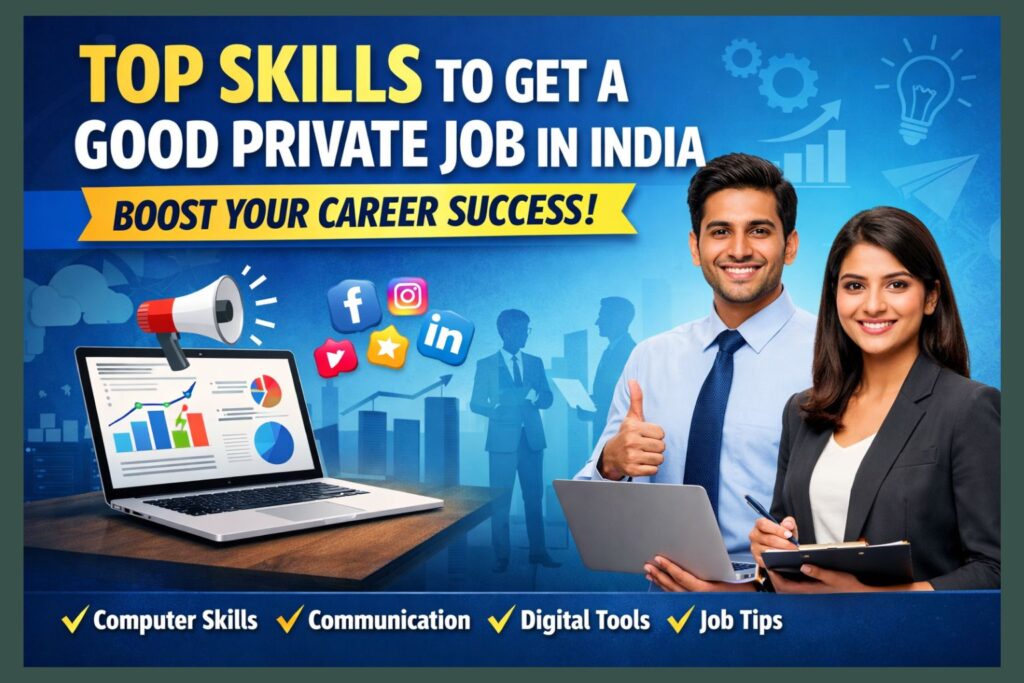
Learning the right professional skills can significantly improve your chances of getting a good private job in India and building a successful long-term career.
Why Skills Matter More Than Degrees in Private Jobs
In today’s competitive job market, many job seekers believe that having a degree is enough to get a good private job. While education is important, most private companies focus more on practical skills than just academic qualifications.
A degree shows that you have completed your education, but skills show that you can actually perform tasks, solve problems, and contribute to the company. That is why employers prefer candidates who have useful skills along with their education.
Changing Hiring Trends in the Private Sector
Over the last few years, hiring trends in India have changed significantly. Companies are no longer selecting candidates based only on marks or degrees. Instead, they look for people who can handle real work situations efficiently.
For example, a candidate who knows basic computer applications, communication skills, and problem-solving techniques often has a better chance of getting hired than someone who only has a degree but lacks practical skills.
Private companies value employees who can:
- Work independently and complete tasks on time
- Communicate clearly with clients and team members
- Use modern tools and technology
- Adapt to new systems and processes
Because businesses move quickly, employers want people who can start contributing from the first day of work.
Skills Increase Your Job Opportunities
Learning the right skills can open doors to many job opportunities. For example, skills like computer knowledge, communication ability, digital tools, and time management are useful in many industries such as offices, customer service, sales, marketing, and administration.
This means that even if two candidates have the same degree, the one with better skills will usually get the job faster.
Skills also help you:
- Get better job roles
- Earn higher salaries over time
- Grow faster in your career
- Switch industries if needed
The Importance of Continuous Skill Development
The workplace is constantly evolving. New technologies, tools, and work methods appear every year. Because of this, successful professionals keep learning new skills throughout their careers.
Instead of relying only on a degree earned years ago, modern job seekers focus on continuous learning and skill development. This approach helps them stay competitive and relevant in the job market.
In simple words, degrees may help you get an interview, but skills help you get the job and succeed in it.
Basic Computer Skills Every Job Seeker Must Learn
In today’s digital workplace, basic computer skills are essential for almost every private job. Whether you work in an office, a retail company, a service center, or a corporate organization, you will likely need to use a computer to complete daily tasks.
Employers expect candidates to have at least a basic understanding of common computer applications and internet usage. Job seekers who already have these skills often get selected faster because they require less training after joining the company.
Microsoft Office Skills
One of the most important computer skills for private jobs is the ability to work with Microsoft Office applications. These tools are widely used in offices for creating documents, managing data, and preparing presentations.
Important applications include:
MS Word
Used for creating documents such as reports, letters, and office notes. Many companies require employees to prepare professional documents using Word.
MS Excel
Excel is used to manage and analyze data. It is commonly used for maintaining records, calculating numbers, creating tables, and preparing simple reports.
MS PowerPoint
PowerPoint is used to create presentations. Employees often use it to explain ideas, present project updates, or share business information in meetings.
Even basic knowledge of these tools can significantly improve your chances of getting hired.
Email Communication and Internet Usage
Most companies communicate through email. Therefore, job seekers should know how to:
- Create and manage an email account
- Write professional emails
- Attach documents and files
- Reply and forward emails properly
In addition to email, employees often need to use the internet for research, communication, and accessing online systems used by the company.
Knowing how to search information online, download files, and use web applications is very useful in many jobs.
File Management and Data Handling
Another important computer skill is the ability to manage files and folders on a computer. This includes:
- Creating and organizing folders
- Saving documents properly
- Renaming files for easy identification
- Backing up important data
Proper file management helps employees work efficiently and ensures that important information is easy to find when needed.
Basic Typing Skills
Typing speed and accuracy are also valuable skills in many private jobs. Employees often need to type emails, reports, or data entries quickly.
Improving your typing speed can help you:
- Complete work faster
- Reduce mistakes
- Increase productivity in office tasks
Many free online tools are available to practice typing and improve speed over time.
Why Computer Skills Are Important for Private Jobs
Almost every modern business uses digital systems to manage operations. Employees who are comfortable working with computers can adapt more easily to workplace technology.
Having basic computer skills shows employers that you are ready to work in a modern office environment and can handle digital tasks efficiently.
Communication Skills – One of the Most Important Job Skills
Communication is one of the most valuable skills for anyone who wants to succeed in the private sector. No matter what type of job you do, you will need to communicate with managers, colleagues, customers, and sometimes clients.
Good communication helps employees explain ideas clearly, avoid misunderstandings, and build positive relationships in the workplace. Companies prefer candidates who can express their thoughts confidently and professionally.
Spoken Communication Skills
In many private jobs, employees need to talk with customers, team members, or supervisors on a daily basis. This is why clear spoken communication is extremely important.
You do not need to speak perfect English, but you should be able to communicate your ideas clearly and politely. Many companies also value employees who can speak confidently during meetings or discussions.
To improve spoken communication:
- Practice speaking clearly and confidently
- Learn to organize your thoughts before speaking
- Use simple and professional language
- Listen carefully before responding
Regular practice can gradually improve your confidence and speaking ability.
Basic English Communication
In India, many private companies use English as a common working language, especially in emails, reports, and meetings. Having basic English communication skills can significantly increase your job opportunities.
Basic English skills include:
- Understanding common workplace words
- Writing simple emails
- Reading instructions and documents
- Speaking basic sentences in professional situations
Even a basic level of English communication can make a big difference when applying for private jobs.
Professional Communication in the Workplace
Professional communication means interacting with others in a respectful, polite, and professional manner. This skill is important when dealing with both colleagues and customers.
Professional communication includes:
- Speaking politely with customers and clients
- Writing clear and professional emails
- Explaining work updates to managers
- Handling difficult conversations calmly
Employees who communicate professionally help create a positive work environment and represent the company well.
Listening Skills
Communication is not only about speaking; listening is equally important. Good employees pay attention to instructions and understand what others are saying before responding.
Strong listening skills help employees:
- Understand tasks clearly
- Avoid mistakes at work
- Respond appropriately to customers
- Work better with team members
Why Communication Skills Matter for Career Growth
Employees with strong communication skills often grow faster in their careers. Managers prefer team members who can explain ideas clearly, interact with clients, and represent the company confidently.
Good communication can help you:
- Perform better in job interviews
- Work effectively in a team
- Build professional relationships
- Get promotions and leadership opportunities
For these reasons, improving communication skills is one of the best investments you can make for your career in the private sector.
Digital Skills That Are in High Demand
As businesses continue to move online, digital skills have become extremely valuable in the private sector. Companies today rely on the internet, software tools, and online platforms to manage their operations, reach customers, and grow their business.
Job seekers who understand basic digital tools and online systems often have a significant advantage in the job market. Even simple digital skills can open opportunities in fields such as marketing, administration, customer service, and e-commerce.
Social Media Handling
Many businesses promote their products and services through social media platforms. Because of this, companies often look for employees who can manage social media accounts professionally.
Basic social media skills include:
- Creating and posting content on platforms like Facebook, Instagram, and LinkedIn
- Responding to customer comments and messages
- Sharing updates about products or services
- Monitoring engagement and feedback
Even small companies need people who can handle social media communication and maintain their online presence.
Basic Digital Marketing Knowledge
Digital marketing is one of the fastest growing fields in the private sector. While advanced digital marketing requires specialized training, basic knowledge of digital marketing can still be very useful for many jobs.
Important areas include:
- Understanding how online advertising works
- Basic knowledge of search engines and website promotion
- Email marketing basics
- Online customer engagement strategies
Employees with digital marketing awareness can help businesses reach more customers and improve their online visibility.
Online Collaboration Tools
Many companies use online tools to manage tasks, communicate with teams, and share documents. Learning how to use such tools can improve your productivity in the workplace.
Common online tools used in offices include:
- Cloud storage platforms for file sharing
- Team communication applications
- Project management tools
- Online meeting platforms for virtual discussions
Knowing how to use these tools helps employees work efficiently, especially when teams are working from different locations.
Basic Data Handling and Online Systems
Modern companies often use digital systems to manage information such as customer records, sales data, and employee details. Employees may need to enter, update, or review data in these systems.
Basic digital skills in this area include:
- Entering and updating information in software systems
- Managing simple online databases
- Understanding how digital records are maintained
Even basic familiarity with digital systems can make a candidate more attractive to employers.
Why Digital Skills Are Important Today
The modern workplace is becoming increasingly digital. Companies want employees who are comfortable using technology and can adapt quickly to new tools.
Learning digital skills can help you:
- Qualify for more job opportunities
- Work more efficiently in modern offices
- Support businesses in online activities
- Stay competitive in the job market
Because technology continues to evolve, developing digital skills is one of the smartest steps you can take to build a successful career in the private sector.
Problem Solving and Critical Thinking
In any workplace, challenges and unexpected situations are common. Companies prefer employees who can analyze problems, think logically, and find practical solutions instead of waiting for others to solve every issue.
This ability is known as problem solving and critical thinking, and it is one of the most valuable skills in the private sector.
What Is Problem Solving?
Problem solving means the ability to identify a problem, understand its cause, and find an effective solution. In a workplace, problems can appear in many forms, such as:
- A customer complaint that needs to be resolved
- A mistake in data or reports
- A delay in completing a task
- A technical issue in a system
Employees who can calmly analyze a situation and suggest a solution are highly valued by employers.
The Role of Critical Thinking
Critical thinking helps employees make better decisions. It involves carefully examining information, considering different possibilities, and choosing the most effective option.
Instead of reacting quickly without thinking, critical thinkers:
- Evaluate the situation properly
- Ask the right questions
- Consider multiple solutions
- Choose the most practical approach
This ability helps avoid mistakes and improves overall work quality.
How Problem Solving Helps in the Workplace
Employees with strong problem-solving skills can contribute significantly to a company’s success. They help maintain smooth operations and reduce unnecessary delays.
For example:
- A customer service executive resolves customer complaints quickly.
- An office assistant identifies errors in documents and corrects them.
- A team member suggests a better way to complete a task faster.
These small improvements can make a big difference in workplace efficiency.
How to Improve Problem Solving Skills
Problem solving is a skill that can be developed with practice. Some ways to improve this ability include:
- Observing how experienced professionals handle workplace problems
- Practicing logical thinking when facing challenges
- Learning to stay calm under pressure
- Analyzing situations before making decisions
Reading case studies, solving puzzles, and discussing ideas with others can also help strengthen critical thinking abilities.
Why Employers Value This Skill
Companies appreciate employees who can take initiative and solve problems independently. Such employees reduce the burden on managers and help teams work more efficiently.
Problem solving and critical thinking not only help you perform better at work but also make you a valuable and reliable member of any organization.
Time Management and Work Discipline
In any private job, employees are expected to complete their work on time and follow company rules. This is why time management and work discipline are considered very important professional skills.
Companies prefer employees who can organize their work efficiently, meet deadlines, and maintain a responsible attitude toward their duties.
Understanding Time Management
Time management means the ability to plan, organize, and complete tasks within a given time frame. In a professional environment, many tasks have deadlines, and employees must complete them without unnecessary delays.
Good time management helps employees:
- Finish tasks before deadlines
- Handle multiple responsibilities efficiently
- Reduce work pressure and stress
- Improve overall productivity
Employees who manage their time well are often seen as reliable and responsible.
Planning and Prioritizing Tasks
One of the key aspects of time management is knowing how to prioritize tasks. In many jobs, employees may receive multiple assignments at the same time.
Instead of trying to do everything at once, it is better to:
- Identify the most important tasks first
- Break large tasks into smaller steps
- Create a daily work plan
- Focus on completing one task properly before moving to the next
This approach helps maintain efficiency and reduces confusion during busy workdays.
Meeting Deadlines
Deadlines are common in private companies. Reports, projects, customer responses, and many other tasks must be completed within a specific time.
Employees who consistently meet deadlines build a strong reputation for reliability. Managers trust such employees with important responsibilities because they know the work will be completed on time.
Failing to meet deadlines repeatedly can affect both individual performance and the overall productivity of the team.
Maintaining Work Discipline
Work discipline refers to maintaining professional behavior and responsibility in the workplace. This includes:
- Arriving at work on time
- Following company policies and guidelines
- Completing assigned tasks responsibly
- Maintaining focus during working hours
Employees who demonstrate discipline are usually seen as dependable team members.
Benefits of Strong Time Management Skills
Employees who develop strong time management and discipline often experience better career growth. These skills help professionals handle increasing responsibilities as they progress in their careers.
Effective time management can help you:
- Improve work performance
- Reduce stress in busy situations
- Build trust with supervisors and colleagues
- Handle larger roles and responsibilities in the future
For anyone planning to build a successful career in the private sector, learning how to manage time effectively is an essential skill.
Customer Handling and Interpersonal Skills
In many private sector jobs, employees interact directly with customers, clients, or colleagues. Because of this, customer handling and interpersonal skills are extremely important for building strong professional relationships.
Companies value employees who can communicate politely, understand customer needs, and maintain a positive attitude while dealing with different types of people.
Understanding Customer Handling Skills
Customer handling skills refer to the ability to interact with customers in a respectful and helpful manner. Many industries such as retail, banking, hospitality, customer support, and sales require employees to deal with customers regularly.
Good customer handling includes:
- Listening carefully to customer concerns
- Providing clear and helpful information
- Maintaining a polite and professional tone
- Resolving problems calmly and efficiently
Employees who treat customers well help improve the company’s reputation and build customer trust.
Managing Difficult Situations
Sometimes customers may be unhappy or frustrated because of a product issue, service delay, or misunderstanding. In such situations, employees must remain calm and professional.
Effective ways to handle difficult situations include:
- Listening patiently without interrupting
- Understanding the problem clearly
- Apologizing if necessary and offering solutions
- Avoiding arguments or negative responses
Handling such situations professionally can turn a negative experience into a positive one for the customer.
Interpersonal Skills in the Workplace
Interpersonal skills refer to the ability to interact and work well with other people, including colleagues, managers, and clients.
Strong interpersonal skills help employees:
- Work effectively in teams
- Build positive relationships with coworkers
- Maintain a cooperative work environment
- Communicate ideas clearly with others
In most organizations, teamwork is essential. Employees who can collaborate well with others contribute to a more productive workplace.
Importance of Positive Attitude and Professional Behavior
A positive attitude can make a big difference in how employees interact with others. People who remain polite, patient, and respectful are usually appreciated by both customers and colleagues.
Professional behavior includes:
- Speaking politely and respectfully
- Showing patience and understanding
- Being helpful and cooperative
- Maintaining professionalism even in stressful situations
Such behavior helps create a friendly and professional work environment.
Why These Skills Are Important for Career Growth
Employees who are good at handling customers and maintaining strong relationships often receive more opportunities for growth within a company.
These skills can help you:
- Build strong professional networks
- Improve customer satisfaction
- Gain trust from managers and clients
- Advance to roles that involve leadership or customer management
Developing strong customer handling and interpersonal skills can therefore play an important role in long-term career success in the private sector.
Basic Sales and Marketing Skills
Sales and marketing are essential activities for almost every business. Companies need employees who can help promote their products or services, communicate value to customers, and support business growth. Because of this, basic sales and marketing skills are highly valuable in the private sector.
Even if your job role is not directly in sales, understanding the basics of marketing and customer persuasion can help you perform better in many positions.
Understanding the Basics of Sales
Sales involves convincing customers to purchase a product or service by explaining its benefits and value. In many companies, employees interact with potential customers and help them make buying decisions.
Basic sales skills include:
- Understanding the features and benefits of a product or service
- Explaining information clearly to customers
- Answering customer questions confidently
- Building trust with potential buyers
Employees who understand how sales work can contribute to the company’s revenue and growth.
Persuasion and Communication in Sales
One of the key parts of sales is the ability to persuade customers in a professional and honest manner. This does not mean forcing someone to buy something. Instead, it means helping customers understand how a product or service can solve their problems.
Effective persuasion involves:
- Listening carefully to customer needs
- Explaining solutions clearly
- Highlighting useful features and benefits
- Maintaining a friendly and confident approach
Strong communication skills play a major role in successful sales interactions.
Understanding Basic Marketing Concepts
Marketing focuses on promoting products or services so that more people become aware of them. While professional marketers handle advanced strategies, many employees benefit from understanding basic marketing ideas.
Some basic marketing concepts include:
- Identifying the target audience for a product
- Understanding customer needs and preferences
- Promoting products through online and offline channels
- Maintaining a positive brand image
Employees with basic marketing awareness can support promotional activities and communicate effectively with customers.
Why Sales and Marketing Skills Are Useful
Even employees who are not working in sales departments benefit from learning these skills. Sales and marketing knowledge helps professionals understand how businesses attract customers and generate revenue.
These skills can help you:
- Communicate product or service benefits effectively
- Support business development activities
- Interact more confidently with customers
- Improve career opportunities in many industries
Because every company depends on customers, employees who understand sales and marketing concepts often become valuable contributors to the organization.
Adaptability and Learning New Technologies
The modern workplace is constantly evolving. New tools, software, and working methods are introduced regularly, and companies expect employees to adapt quickly to these changes. Because of this, adaptability and the ability to learn new technologies have become important professional skills.
Employees who are open to learning and improving themselves are often more successful in the private sector.
Understanding Adaptability in the Workplace
Adaptability means the ability to adjust to new situations, tasks, or technologies without difficulty. In many jobs, work processes and tools may change over time.
For example, a company might introduce a new software system, update its workflow, or adopt new digital tools. Employees who can learn these changes quickly help the organization operate smoothly.
Adaptable employees usually:
- Accept changes with a positive attitude
- Learn new systems without hesitation
- Adjust their work methods when required
- Stay productive even in changing environments
This flexibility makes them valuable team members.
Importance of Learning New Technologies
Technology plays a major role in almost every industry today. Offices use software for managing data, communicating with teams, and tracking business operations.
Employees who are willing to learn new technologies can improve their efficiency and perform tasks more effectively.
Examples of workplace technologies include:
- Business software and management systems
- Online collaboration platforms
- Digital communication tools
- Data management and reporting tools
Learning how to use these technologies can make daily work easier and more organized.
Benefits of Being a Continuous Learner
Successful professionals understand that learning does not stop after completing formal education. Continuous learning helps employees stay competitive in the job market and adapt to future changes.
Employees who regularly learn new skills and technologies can:
- Handle advanced job responsibilities
- Improve their efficiency and productivity
- Qualify for better roles and promotions
- Stay relevant in a rapidly changing industry
Employers often prefer candidates who show enthusiasm for learning and self-improvement.
How to Develop This Skill
Developing adaptability and technology skills requires a willingness to explore new tools and stay curious about learning.
You can improve this ability by:
- Practicing new software and digital tools
- Taking online courses or training programs
- Reading about new industry trends
- Asking experienced professionals for guidance
With a positive learning mindset, it becomes easier to adapt to new technologies and succeed in the modern workplace.
How to Start Learning These Skills (Step-by-Step)
Many job seekers understand the importance of skills but are not sure where to start or how to learn them. The good news is that today there are many easy and affordable ways to develop job skills.
By following a clear step-by-step approach, you can gradually build the abilities needed for a successful career in the private sector.
Step 1: Identify the Skills You Need
The first step is to understand which skills are most useful for the type of job you want. For example:
- Office jobs often require computer skills, communication, and basic data handling.
- Customer service jobs require communication and customer handling skills.
- Sales and marketing roles require persuasion, marketing knowledge, and interpersonal skills.
Once you identify the important skills for your target job, you can focus your learning efforts in the right direction.
Step 2: Start With Basic Computer and Communication Skills
For most private jobs, the two most important starting points are:
- Basic computer knowledge
- Communication skills
Learning how to use office software, send professional emails, and communicate clearly with others can significantly improve your job prospects.
These skills are considered foundational skills because they are useful in almost every profession.
Step 3: Use Free Online Learning Resources
The internet offers many free resources that can help you develop professional skills. You can learn through:
- Educational videos
- Online tutorials and articles
- Free practice exercises
- Skill-development courses
These resources allow you to learn at your own pace and gradually improve your abilities.
Step 4: Practice Regularly
Learning skills is not only about studying information. Regular practice is essential for improvement.
For example:
- Practice typing and working with documents on a computer.
- Practice speaking clearly and confidently with friends or colleagues.
- Try solving small problems logically to improve critical thinking.
The more you practice, the more confident and capable you become.
Step 5: Apply Skills in Real Situations
Whenever possible, try to apply your skills in real situations. Practical experience helps you understand how skills are used in the workplace.
You can gain experience by:
- Helping with small office tasks
- Assisting in family businesses
- Working on small freelance projects
- Volunteering for tasks that require computer or communication skills
Real-world practice strengthens your knowledge and prepares you for professional work environments.
Step 6: Keep Improving Your Skills
Skill development is an ongoing process. Even after getting a job, professionals continue learning new tools and improving their abilities.
By consistently upgrading your skills, you can:
- Perform better at work
- Increase your chances of promotion
- Explore new career opportunities
Developing the habit of continuous learning will help you build a stable and successful career in the private sector.
Common Mistakes Job Seekers Make
Many job seekers struggle to find good private jobs not because of a lack of opportunities, but because they make certain common mistakes during their preparation. Understanding these mistakes can help you avoid them and improve your chances of getting hired.
Depending Only on a Degree
One of the biggest mistakes many candidates make is believing that a degree alone will guarantee a good job. While education is important, employers are increasingly looking for candidates who have practical skills and the ability to perform real tasks.
Candidates who focus only on academic qualifications but ignore skill development often find it difficult to compete in the private job market.
To improve job prospects, it is important to combine your education with practical skills such as computer knowledge, communication, and problem-solving abilities.
Not Improving Communication Skills
Many job seekers ignore the importance of communication skills. Even if a candidate has technical knowledge, poor communication can affect job interviews and workplace performance.
Employers prefer candidates who can:
- Express their ideas clearly
- Communicate politely with customers and colleagues
- Write simple and professional emails
Improving communication skills can significantly increase your confidence during interviews and professional interactions.
Avoiding New Technology
Another common mistake is avoiding new tools or technologies. In today’s digital world, many workplaces use modern software and online systems.
Candidates who hesitate to learn new technologies may struggle to keep up with workplace requirements. Being open to learning new tools and adapting to digital systems is essential for long-term career growth.
Lack of Continuous Learning
Some job seekers stop learning after completing their formal education. However, the job market continues to change, and new skills become important over time.
Professionals who regularly update their skills remain competitive and can adapt more easily to changing job requirements.
Continuous learning can include:
- Learning new software tools
- Improving communication and professional skills
- Understanding industry trends and technologies
Ignoring Practical Experience
Another mistake is focusing only on theory without gaining practical experience. Employers often prefer candidates who have some form of practical exposure.
Even small experiences such as internships, freelance work, volunteering, or assisting with office tasks can help you understand how real workplaces function.
Practical experience helps job seekers build confidence and demonstrate their abilities during job interviews.
Final Advice: Build Skills to Grow in the Private Sector
Getting a good private job is not only about qualifications. It is about developing the right combination of skills, knowledge, and professional attitude.
Candidates who invest time in learning useful skills such as computer knowledge, communication, problem solving, and digital tools often have better career opportunities.
Instead of waiting for the perfect job, focus on improving your abilities and preparing yourself for the professional world. Employers appreciate individuals who show dedication to learning and self-improvement.
With consistent effort, patience, and the right skill development, you can build a strong and successful career in the private sector.
Frequently Asked Questions (FAQs)
Q1 – Which skill is most important for getting a private job in India?
Communication skills and basic computer knowledge are among the most important skills for private jobs. These abilities help employees perform daily tasks efficiently and communicate effectively in the workplace.
Q2 – Can I get a private job without technical skills?
Yes, many entry-level private jobs do not require advanced technical skills. However, having basic skills such as communication, computer knowledge, and customer handling can greatly improve your chances of getting hired.
Q3 – How long does it take to learn job skills?
The time required depends on the skill and your dedication. Basic skills such as computer applications or communication can often be learned within a few weeks or months with regular practice.
Q4 – Which computer skills are best for beginners?
Beginners should start with essential tools such as Microsoft Word, Excel, PowerPoint, email communication, and basic internet usage. These skills are useful in most office jobs.
Q5 – Are online courses useful for learning job skills?
Yes, online courses can be very helpful for learning new skills. Many platforms provide practical lessons, exercises, and demonstrations that help learners improve their abilities at their own pace.