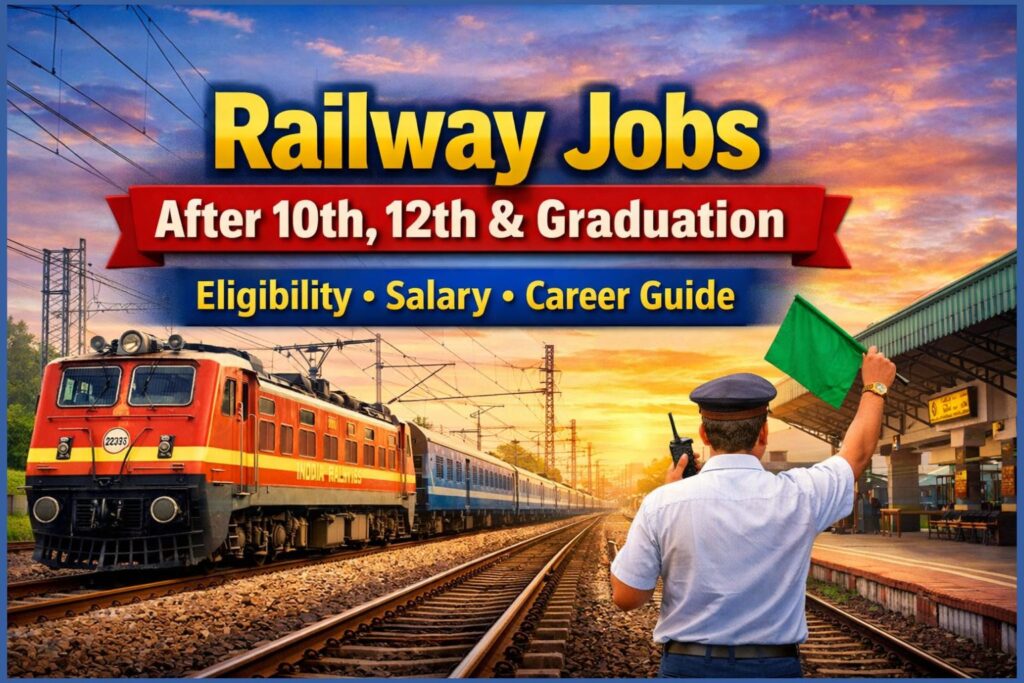
Learn about railway jobs after 10th, 12th and graduation, including eligibility, salary, popular posts and how to start preparing for a career in Indian Railways.
Why Railway Jobs Are a Popular Career Choice
For many students in India, getting a government job is a long-term career goal because it offers stability, respect, and financial security. Among all government sectors, Indian Railways stands out as one of the largest and most reliable employers. Every year, thousands of vacancies are announced through different railway recruitment exams, giving students from different educational backgrounds a chance to build a stable career.
One of the biggest advantages of railway jobs is that opportunities are available for students with different qualifications. Whether someone has completed 10th, 12th, or graduation, there are several railway posts that they can apply for depending on their eligibility.
Railway jobs are also attractive because they offer regular salary, job security, allowances, and career growth opportunities. Many railway employees start with entry-level posts and gradually get promoted to higher positions through experience and departmental exams.
However, before starting preparation, it is important to understand what types of railway jobs are available and what qualifications are required for each post. In this guide, we will explain the most common railway jobs after 10th 12th and graduation, along with eligibility requirements, expected salary, and important career information.
If you are planning to prepare for railway exams, understanding these job opportunities will help you choose the right path and start your preparation with confidence.
Why Many Students Choose a Career in Indian Railways
Indian Railways is not just a transportation system; it is also one of the largest employers in the world. Millions of people work in different departments of the railway system, performing important roles that help keep the country moving every day. Because of its scale and stability, a railway job is considered a secure and respected career option in India.
One of the main reasons students prefer railway jobs is job security. Unlike many private sector jobs, government jobs in the railway sector offer long-term stability. Once selected through the recruitment process, employees receive regular salaries, benefits, and protection under government service rules.
Another attractive feature of railway jobs is the salary structure and allowances. Railway employees not only receive basic pay but also additional benefits such as house rent allowance (HRA), travel allowances, medical facilities, and pension benefits after retirement.
Railway jobs also offer career growth opportunities. Many employees start with entry-level positions and later receive promotions through departmental exams or experience. With dedication and consistent performance, it is possible to move to higher positions within the railway system.
Apart from financial stability, working in Indian Railways also gives employees the satisfaction of being part of a national service that connects cities, towns, and villages across the country. This sense of responsibility and contribution to society makes railway jobs even more meaningful.
Before starting preparation, it is also helpful to understand different railway exams in india and the job roles they offer. Knowing the available career options can help students choose the right exam and prepare in a focused way.
Railway Jobs After 10th
Many students believe that railway jobs are available only after higher education, but that is not true. Indian Railways also provides job opportunities for candidates who have completed their 10th standard. These jobs are usually entry-level positions that play an important role in maintaining railway operations across the country.
Students who want to start their career early often choose these posts because they offer a stable government job along with salary, allowances, and future promotion opportunities.
Popular Railway Jobs After 10th
Some of the most common railway jobs available for candidates who have completed 10th class include:
Track Maintainer (Group D)
Track maintainers are responsible for inspecting and maintaining railway tracks to ensure safe train operations.
Helper / Assistant in Technical Departments
Helpers work with technicians and engineers in departments such as electrical, mechanical, and signal maintenance.
Hospital Attendant
This role involves assisting medical staff in railway hospitals and healthcare facilities.
Assistant Pointsman
Pointsmen help in controlling railway track switching operations at stations to guide trains safely.
Most of these positions are recruited under the RRB Group D recruitment process.
Eligibility for Railway Jobs After 10th
The eligibility requirements for railway jobs after 10th are generally simple:
• Candidates must have passed 10th standard from a recognized board.
• The typical age limit is usually 18 to 33 years (age relaxation may apply for reserved categories).
• Some technical positions may require ITI certificates related to specific trades.
These eligibility conditions may vary slightly depending on the specific recruitment notification.
Salary for Railway Jobs After 10th
Railway jobs after 10th usually fall under Level 1 of the 7th Pay Commission pay structure.
Typical salary details include:
• Basic Pay: Around ₹18,000 per month
• Additional benefits such as HRA, travel allowance, and medical facilities
• Total monthly salary can range between ₹22,000 to ₹28,000 depending on location and allowances.
Even though these are entry-level positions, employees can still receive promotions through experience and departmental exams over time.
Railway Jobs After 12th
Students who have completed their 12th standard have more job opportunities in Indian Railways compared to candidates who have only completed 10th. Many railway posts that involve office work, station operations, and ticket management require at least a 12th pass qualification.
These jobs are generally recruited through the RRB NTPC (Non-Technical Popular Categories) exams, which are among the most popular railway recruitment exams in India.
Popular Railway Jobs After 12th
Some common railway posts available for 12th pass candidates include:
Junior Clerk Cum Typist
This is an office-based job where employees handle administrative tasks such as data entry, file management, and basic documentation.
Accounts Clerk Cum Typist
Accounts clerks assist in maintaining financial records, preparing reports, and managing accounting documents within railway departments.
Junior Time Keeper
Time keepers are responsible for maintaining duty records and shift schedules of railway employees.
Train Clerk
Train clerks maintain records related to train movement, cargo details, and operational schedules.
These jobs are suitable for students who prefer office-based work environments.
Eligibility for Railway Jobs After 12th
The eligibility criteria for most railway jobs after 12th generally include:
• Candidates must have passed 12th class from a recognized board.
• The typical age limit is usually 18 to 33 years.
• Some posts such as clerk or typist may require basic typing skills.
The exact requirements can vary depending on the recruitment notification issued by the Railway Recruitment Board (RRB).
Salary for Railway Jobs After 12th
Most railway jobs for 12th pass candidates fall under Level 2 or Level 3 of the 7th Pay Commission.
Typical salary structure:
• Basic Pay: Around ₹19,900 to ₹21,700 per month
• Additional allowances such as HRA, travel allowance, and medical benefits
• Total monthly salary can range between ₹25,000 to ₹35,000 depending on location and allowances.
These posts also provide opportunities for promotion and career growth within the railway system.
Railway Jobs After Graduation
Graduates have access to some of the most attractive and responsible positions in Indian Railways. These jobs usually involve supervisory roles, station operations, and administrative responsibilities. Because these posts require higher qualifications, they also offer better salary packages and greater career growth opportunities.
Most of these jobs are filled through the RRB NTPC Graduate Level exams, which attract a large number of candidates every year.
Popular Railway Jobs After Graduation
Here are some well-known railway posts available for graduates:
Station Master
The Station Master is responsible for managing train operations at a railway station. This role includes supervising station staff, coordinating train arrivals and departures, ensuring passenger safety, and handling operational issues.
Goods Guard
Goods Guards manage freight trains and ensure the safe movement of goods across different railway routes. They monitor train operations and communicate with station staff during the journey.
Commercial Apprentice (CA)
Commercial Apprentices work in the commercial department of Indian Railways. They handle responsibilities related to ticketing, passenger services, and commercial operations.
Traffic Apprentice (TA)
Traffic Apprentices assist in managing railway traffic operations. Their role involves coordinating train movement and ensuring smooth railway traffic management.
These jobs are highly respected and provide strong long-term career opportunities within the railway system.
Eligibility for Railway Jobs After Graduation
The basic eligibility requirements for graduate-level railway jobs generally include:
• Candidates must have a graduation degree from a recognized university.
• The usual age limit is around 18 to 33 years (age relaxation may apply for reserved categories).
• Candidates must meet the eligibility conditions mentioned in the official RRB recruitment notification.
Since these positions involve greater responsibility, the recruitment process can be more competitive compared to entry-level railway jobs.
Salary for Railway Jobs After Graduation
Graduate-level railway jobs usually fall under Level 5 or Level 6 of the 7th Pay Commission pay structure.
Typical salary details include:
• Basic Pay: Around ₹29,200 to ₹35,400 per month
• Additional benefits such as HRA, travel allowance, medical facilities, and pension benefits
• Total monthly salary may range between ₹40,000 to ₹60,000 depending on allowances and posting location.
Because of the higher pay scale and career growth opportunities, these positions are considered among the most desirable railway jobs.
Railway Exam Preparation Tips for Beginners
Once you understand the different railway jobs available after 10th, 12th, and graduation, the next important step is to start preparing in the right way. Railway exams can be competitive, but with proper planning and consistent effort, many students successfully clear these exams every year.
Here are some practical preparation tips that can help beginners start their railway exam journey with confidence.
Understand the Exam Pattern and Syllabus
Before starting your preparation, take some time to understand the exam pattern and syllabus of the railway exam you are targeting. Knowing the subjects and question format helps you focus on the right topics.
Create a Simple Study Plan
A structured study plan can make preparation easier. Divide your time between mathematics, reasoning, general awareness, and general science so that you can cover all important subjects gradually.
Practice Questions Regularly
Regular practice improves both speed and accuracy. Solving objective questions daily can help you become comfortable with the types of questions that appear in railway exams.
Use the Right Study Material
Choosing the right books and study resources is extremely important for effective preparation. Reliable books can help you understand concepts clearly and provide enough practice questions.
Stay Consistent and Motivated
Consistency is the key to success in competitive exams. Even studying a few hours every day can produce better results than studying irregularly.
If you want a detailed strategy and step-by-step study plan, you can also read our complete railway exam preparation guide, which explains how beginners can prepare effectively for railway exams.
Understanding the Railway Recruitment Process
Before applying for a railway job, it is also important to understand how the selection process works. Knowing the recruitment stages helps candidates prepare better and avoid confusion during the application process.
The railway recruitment process usually involves several stages designed to evaluate a candidate’s knowledge, skills, and physical fitness.
Computer Based Test (CBT)
Most railway exams begin with a computer-based test. This exam typically includes questions from mathematics, reasoning, general awareness, and general science.
Second Stage CBT (if applicable)
Some railway exams include a second computer-based test that evaluates candidates in more detail depending on the job role.
Skill Test or Typing Test
Certain posts such as clerks and typists may require candidates to pass a typing or skill test.
Physical Efficiency Test (PET)
For some technical or Group D positions, candidates may need to pass a physical efficiency test to prove their physical fitness.
Document Verification and Medical Test
Finally, selected candidates must complete document verification and a medical examination before receiving their final appointment.
Understanding the complete recruitment process helps candidates prepare more confidently and avoid surprises during the selection stages.

Upgrade Your Study Setup for Faster Career Growth!
Discover the Best Online Learning Gadgets for Career Growth (Must-Have Study Tools for Students & Professionals) and choose the right devices that improve focus, productivity, and learning efficiency.
Explore the Gadget Guide →Best Books for Railway Exam Preparation
Choosing the right study material is an important step in railway exam preparation. Good books can help you understand concepts clearly, practice important questions, and become familiar with the exam pattern. Many successful candidates recommend focusing on a few reliable books rather than collecting too many study materials.
A well-selected book should cover the main subjects asked in railway exams, including mathematics, reasoning, general awareness, and general science. It should also include practice questions and previous year exam papers so that students can test their understanding.
Some popular books recommended by many railway exam aspirants include:
- Mathematics books for arithmetic and numerical ability
- Reasoning books that help improve logical thinking and problem-solving skills
- General knowledge books that cover important national and international topics
- Previous year solved papers that help students understand the real exam pattern
Using the right books together with regular practice can significantly improve your preparation and confidence.
If you want to explore recommended study resources in detail, you can check our guide on best books for railway exam preparation, where subject-wise book suggestions are explained for beginners and serious aspirants.
Final Advice for Students Who Want a Railway Job
Preparing for a railway job is a journey that requires patience, discipline, and consistent effort. Many successful candidates started their preparation with limited resources but achieved their goals through determination and regular study.
The most important step is to clearly understand which railway job matches your qualification and career interests. Once you decide your target exam, focus on building strong fundamentals in the important subjects and practice questions regularly.
Remember that success in competitive exams does not happen overnight. It is the result of steady preparation, learning from mistakes, and staying motivated even when the journey feels challenging.
Indian Railways continues to offer excellent career opportunities for students from different educational backgrounds. With the right preparation strategy, reliable study material, and a positive mindset, your goal of working in the railway sector can definitely become achievable.
Stay focused, keep improving your preparation every day, and move forward with confidence toward your dream career.
FAQs
Q1. Can I get a railway job after 10th?
Yes, several railway jobs such as Track Maintainer, Helper, and Assistant Pointsman are available for candidates who have completed their 10th standard.
Q2. Which railway jobs are available after 12th?
After 12th, candidates can apply for posts such as Junior Clerk, Accounts Clerk, Train Clerk, and other NTPC positions.
Q3. What are the best railway jobs after graduation?
Some popular railway jobs after graduation include Station Master, Goods Guard, Commercial Apprentice, and Traffic Apprentice.
Q4. What is the age limit for railway jobs?
The typical age limit for most railway recruitment exams is between 18 and 33 years, although age relaxation may apply for reserved categories.
Q5. How can beginners start railway exam preparation?
Beginners can start by understanding the exam syllabus, selecting the right books, practicing questions regularly, and following a consistent study plan.

Government Job Preparation & Career Guidance for Indian Exams
Read helpful blogs and preparation guides for SSC, Banking, Railway, and State Government exams. Learn exam strategies, syllabus insights, paper patterns, and make confident career decisions.
Govt Job Preparation Guides →