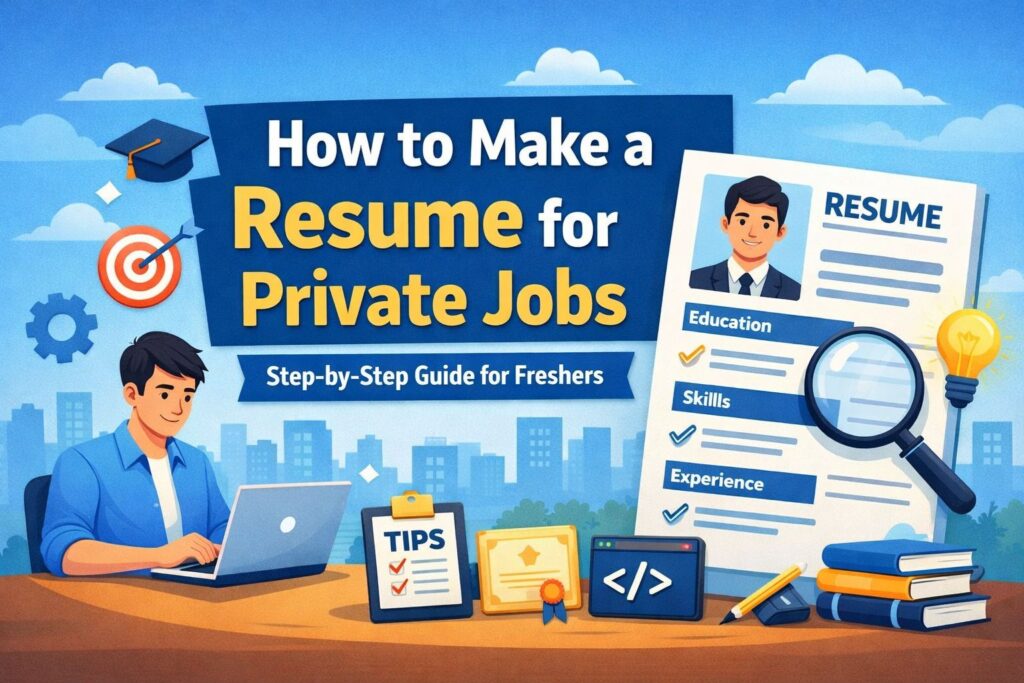
Learn how to make a professional resume for private jobs with this beginner-friendly step-by-step guide, including resume format, examples, and practical tips.
What is a Resume and Why It Is Important for Private Jobs
A resume is a short document that explains who you are, what education you have completed, what skills you have, and what type of job you are looking for. It is usually the first document an employer sees when you apply for a job.
In simple words, a resume is your professional introduction. It helps employers quickly understand whether you are suitable for the job or not.
Most private companies receive many job applications for a single position. Because of this, recruiters cannot meet every candidate personally. Instead, they first check resumes and shortlist candidates who match the job requirements. If your resume looks professional and clearly shows your skills and qualifications, your chances of getting an interview become much higher.
Why a Resume is Important for Private Jobs
A good resume plays a very important role in getting a private job. It helps employers quickly evaluate your background and decide whether you are the right candidate.
Here are some important reasons why a resume is necessary:
1. Creates the First Impression
Your resume is usually the first thing a recruiter sees. A well-written resume creates a positive first impression and makes the employer interested in your profile.
2. Shows Your Skills and Qualifications
A resume highlights your education, technical skills, and abilities. This helps companies understand whether you can perform the responsibilities of the job.
3. Helps Recruiters Shortlist Candidates
Recruiters often receive hundreds of applications. A clear and well-structured resume helps them quickly identify suitable candidates.
4. Increases Your Chances of Getting an Interview
Even if you have good skills, you may not get an interview if your resume is poorly written. A professional resume improves your chances of being selected for the next stage.
5. Acts as Your Career Summary
Your resume works like a summary of your professional journey. It shows what you have studied, what you know, and what kind of work you are capable of doing.
Resume vs CV – What is the Difference?
Many people think that resume and CV are the same, but there is a small difference between them.
A resume is a short document, usually one or two pages, that highlights your most important skills, education, and experience. It is commonly used for private sector jobs.
A CV (Curriculum Vitae) is a more detailed document that includes your full academic background, research work, publications, and professional history. CVs are mostly used in academic, research, or government positions.
For most private jobs in India, employers prefer a simple and well-structured resume instead of a long CV.
What Recruiters Look for in a Resume
When employers review resumes, they usually look for some key information:
- Relevant education
- Important skills related to the job
- Any work experience or internship
- Communication and computer skills
- A clear and professional format
Recruiters usually spend only a few seconds scanning a resume. Therefore, your resume should be simple, clear, and easy to read.
If you want to increase your chances of getting hired, it is also important to understand how to search and apply for jobs correctly. You can read our detailed guide on How to Find a Private Job in India to learn practical job-search strategies.
Basic Structure of a Good Resume
A good resume should be clear, organized, and easy to read. Recruiters often scan resumes very quickly, so the information should be arranged in a proper structure. If your resume has a clean layout and the right sections, employers can quickly understand your qualifications and skills.
For most private jobs, a simple and professional resume format works best. The document should usually be one page for freshers and up to two pages for experienced candidates.
Below are the main sections that a good resume should include.
1. Personal Information
This section contains your basic contact details so that employers can reach you easily.
It normally includes:
- Full name
- Mobile number
- Professional email address
- City or location
- LinkedIn profile (optional)
Your name should be clearly visible at the top of the resume, usually in a slightly larger font.
2. Career Objective
The career objective is a short statement that explains:
- What type of job you are looking for
- What skills you have
- How you can contribute to the company
This section is especially useful for freshers who do not have work experience yet. A good career objective should be short, clear, and focused on your career goals.
3. Education Details
In this section, you mention your academic background. Recruiters want to know what qualifications you have completed.
Education details usually include:
- Degree or course name
- School or college name
- Board or university
- Year of completion
- Percentage or CGPA
Your education should normally be written in reverse chronological order, which means the most recent qualification appears first.
4. Skills
This section highlights the abilities that make you suitable for the job. Skills can be divided into two main types:
Technical Skills
These are job-related abilities such as:
- Computer skills
- Software knowledge
- Data entry
- Programming
- Digital marketing
Soft Skills
These are personal abilities that help you work effectively with others, such as:
- Communication skills
- Problem-solving
- Teamwork
- Time management
Adding relevant skills helps employers quickly understand your strengths.
5. Work Experience
If you have worked before, you should include your work experience in this section.
It usually contains:
- Job title
- Company name
- Work duration
- Key responsibilities
For freshers who do not have job experience, this section can include:
- Internships
- Training programs
- Academic projects
- Freelance work
6. Certifications
Many candidates complete additional courses or training programs. These certifications can improve your chances of getting a job.
Examples include:
- Computer courses
- Digital marketing courses
- Language certifications
- Professional training programs
Including relevant certifications shows that you are actively improving your skills.
7. Achievements
This section highlights any important accomplishments such as:
- Awards or recognitions
- Competition wins
- Academic achievements
- Special projects
Achievements help your resume stand out from other candidates.
8. Languages
Mentioning languages can be helpful, especially for jobs that require communication with different people.
For example:
- English
- Hindi
- Regional languages
9. Hobbies or Interests (Optional)
This section is optional, but it can sometimes give recruiters a better idea of your personality.
Common examples include:
- Reading
- Learning new technologies
- Playing sports
- Traveling
However, hobbies should be genuine and relevant.
A well-structured resume with these sections makes your profile easy to understand and professional. Recruiters prefer resumes that present information in a simple and organized way.
Personal Information – What to Include and What to Avoid
The personal information section is usually placed at the top of your resume. This section provides the basic details that employers need in order to contact you for interviews or further communication.
Although this section looks simple, many job seekers make mistakes here by adding unnecessary information or using unprofessional contact details. A clean and professional personal information section helps create a positive impression.
Information You Should Include
A resume should contain only the most important contact details. These details help recruiters reach you quickly if they are interested in your profile.
1. Full Name
Your full name should appear at the top of the resume and should be clearly visible. It is usually written in a slightly larger font than the rest of the text.
Example:
Rohan Sharma
Avoid using nicknames or shortened names in your resume.
2. Mobile Number
Your phone number is one of the most important contact details because recruiters often call candidates directly for interviews.
Make sure that:
- Your number is active and reachable
- Your voicemail greeting is professional (if applicable)
Example format:
+91 9876543210
3. Professional Email Address
A professional email address makes your resume look more serious and reliable.
Your email address should ideally contain your name and avoid informal words.
Good examples:
Bad examples:
If necessary, you can create a new email address specifically for job applications.
4. Location (City and State)
Most recruiters prefer to know where a candidate is located. However, you do not need to write your full home address.
Simply mentioning the city and state is usually enough.
Example:
Delhi, India
This helps employers understand whether relocation might be required.
5. LinkedIn Profile (Optional)
If you have a LinkedIn profile, you can add its link in your resume. LinkedIn is a professional networking platform where recruiters often check candidate profiles.
Make sure that your LinkedIn profile is complete and professional before adding it.
Example:
linkedin.com/in/rohan-sharma
Information You Should Avoid
Many people add unnecessary personal details in their resumes. This can make the document look unprofessional and outdated.
You should avoid including the following information:
1. Full Home Address
Writing the complete address is usually not necessary. Just mentioning your city is enough.
2. Religion or Caste
Private companies do not require information about religion, caste, or community. These details should not be included in a professional resume.
3. Marital Status
Marital status is not relevant for most private jobs and should generally be avoided.
4. Aadhaar Number or Personal ID Numbers
Sensitive personal information like Aadhaar numbers, passport numbers, or bank details should never be included in a resume.
5. Personal Photos (Usually Not Required)
In most private sector jobs in India, adding a photo is not necessary unless the employer specifically asks for it.
Tips for Writing the Personal Information Section
To make your resume look professional, keep these tips in mind:
- Keep this section simple and clean
- Make sure all contact details are correct and updated
- Use a professional email address
- Avoid unnecessary personal information
A clear personal information section ensures that employers can easily contact you when they want to schedule an interview.
How to Write a Good Career Objective
A career objective is a short statement in your resume that explains your professional goals and the type of job you are looking for. It usually appears near the top of the resume, just below your personal information.
For freshers and beginners, the career objective section is very important because it allows you to explain what you want to achieve in your career and how you can contribute to the company, even if you do not have work experience yet.
A well-written career objective helps recruiters quickly understand your motivation, interests, and career direction.
Why Career Objective is Important
The career objective gives employers a quick overview of your professional goals. It helps them understand whether your interests match the job role they are offering.
Some benefits of a good career objective include:
- It clearly shows your career goals
- It highlights your skills and strengths
- It makes your resume look focused and professional
- It helps recruiters understand your interest in the job
However, the objective should always be short and meaningful. Long or confusing objectives can reduce the impact of your resume.
Tips for Writing a Good Career Objective
To write an effective career objective, keep the following points in mind.
1. Keep it Short and Clear
Your career objective should usually be one or two sentences. Avoid writing long paragraphs.
2. Mention Your Skills
You can briefly highlight important skills that are relevant to the job.
3. Focus on Contribution
Employers want to know how you can contribute to their company. Your objective should reflect this.
4. Match the Job Role
Try to write an objective that relates to the job you are applying for.
Example Career Objectives for Freshers
Here are some simple examples that beginners can use as inspiration.
Example 1
Motivated and detail-oriented graduate seeking an opportunity to start a professional career where I can apply my skills, learn new technologies, and contribute to the growth of the organization.
Example 2
A dedicated and hardworking individual looking for an entry-level position where I can develop my professional skills and gain valuable work experience.
Example 3
Computer-literate candidate seeking a position in a reputed company where I can use my technical and communication skills to support organizational success.
Example 4
Enthusiastic fresher looking for an opportunity to begin my career and build practical experience while contributing positively to the company’s objectives.
Common Mistakes to Avoid
Many job seekers make mistakes while writing their career objective. Avoid the following issues:
- Writing very long objectives
- Using generic sentences copied from the internet
- Focusing only on personal benefits
- Using complicated language
A simple and honest objective usually works best.
When your resume is clear and well-written, it can help you get shortlisted for interviews. Once you receive an interview call, it is equally important to prepare properly. You can also read our guide on Private Job Interview Tips for Freshers to learn how to perform well during job interviews.
How to Write Education Details in a Resume
The education section of a resume shows your academic qualifications and helps employers understand your educational background. For freshers and entry-level job seekers, this section is especially important because it often becomes the main indicator of your knowledge and learning ability.
Recruiters usually look at this section to see what you studied, where you studied, and when you completed your education. Therefore, the information should be clear, accurate, and well organized.
Correct Order for Writing Education
Education details are normally written in reverse chronological order, which means your most recent qualification should appear first.
For example:
- Graduation
- 12th Class
- 10th Class
This format allows recruiters to quickly see your latest qualification.
Information to Include in the Education Section
Each education entry should include the following details:
1. Degree or Qualification
Mention the name of the course or qualification clearly.
Examples:
- Bachelor of Commerce (BCom)
- Bachelor of Science (BSc)
- Bachelor of Arts (BA)
- Higher Secondary (12th Class)
- Secondary School (10th Class)
2. School or College Name
Write the name of the school, college, or institute where you completed the course.
Example:
Delhi University
Government Senior Secondary School
3. Board or University
Mention the board or university that issued the qualification.
Examples:
- CBSE
- ICSE
- Delhi University
- State Board
4. Year of Completion
Always mention the year when you completed your education.
Example:
2023
5. Percentage or CGPA
If your marks are good, you can include them in your resume.
Examples:
65%
7.8 CGPA
If your marks are average or low, this section can sometimes be skipped for older qualifications.
Example of Education Section
Below is a simple example of how the education section can be written.
Education
Bachelor of Commerce (BCom)
Delhi University, Delhi
2023 | 65%
Higher Secondary (12th Class)
CBSE Board
2020 | 72%
Secondary School (10th Class)
CBSE Board
2018 | 75%
This format is clear and easy for recruiters to read.
Tips for Writing the Education Section
To make this section more effective, keep the following tips in mind:
- Always write education in reverse order (latest first)
- Use clear formatting and proper spacing
- Avoid writing long descriptions
- Double-check the accuracy of years and marks
If you have completed any additional training or professional courses, those can be mentioned in the certifications section, which we will discuss later.
A well-organized education section helps employers quickly understand your academic background and makes your resume look more professional.
Important Skills to Add in Resume for Private Jobs
The skills section is one of the most important parts of a resume. It helps employers quickly understand what abilities you have and whether you are suitable for the job.
In many private companies, recruiters first check the skills section before reading the entire resume. If your skills match the job requirements, your chances of getting shortlisted become much higher.
Skills in a resume are generally divided into two categories: technical skills and soft skills.
1. Technical Skills
Technical skills are job-related abilities that you learn through education, training, or practical experience. These skills show that you have the knowledge required to perform specific tasks.
Some common technical skills for private jobs include:
- Computer basics
- Microsoft Word, Excel, and PowerPoint
- Internet and email usage
- Data entry
- Typing skills
- Basic accounting software (such as Tally)
- Digital marketing basics
- Graphic design tools
- Programming languages (if relevant)
If you have completed any computer courses or professional training, you should include those skills in this section.
2. Soft Skills
Soft skills are personal abilities that help you work effectively with others and perform well in a professional environment. Many employers consider soft skills just as important as technical skills.
Some important soft skills include:
- Communication skills
- Teamwork
- Problem-solving ability
- Time management
- Adaptability
- Leadership skills
- Attention to detail
- Customer service skills
Strong soft skills show that you can work well with colleagues and handle responsibilities effectively.
3. Job-Specific Skills
It is also helpful to include skills that are directly related to the job you are applying for. For example:
For office jobs, useful skills may include:
- Microsoft Excel
- Documentation and reporting
- Data entry
- Office management
For sales or customer support jobs, important skills may include:
- Communication
- Negotiation
- Customer handling
- Sales techniques
Customizing your skills according to the job role can make your resume more relevant.
Example of Skills Section
Below is an example of how you can write the skills section in your resume.
Skills
- Microsoft Word, Excel, and PowerPoint
- Basic computer operations
- Data entry and typing
- Internet and email handling
- Good communication skills
- Time management and teamwork
This format is simple, clear, and easy for recruiters to scan.
Tips for Writing the Skills Section
To make your skills section more effective, follow these tips:
- Include relevant skills related to the job
- Avoid adding too many unnecessary skills
- Use bullet points for better readability
- Be honest about your abilities
Remember, during interviews employers may ask questions about the skills mentioned in your resume, so it is important to include only the skills you actually possess.
If you want to improve your chances of getting a private job, learning the right professional skills can make a big difference.
How Freshers Can Add Experience in a Resume
Many freshers believe that they cannot create a strong resume because they do not have job experience. However, this is not completely true. Even if you have never worked in a full-time job, you may still have valuable experiences that can be included in your resume.
Employers understand that freshers are at the beginning of their careers. Instead of expecting years of experience, recruiters often look for training, projects, internships, and practical skills that show your ability to learn and work.
1. Internship Experience
If you have completed an internship during or after your studies, it should definitely be included in your resume. Internships provide practical exposure to real work environments.
When writing internship details, include:
- Internship position or role
- Company or organization name
- Duration of internship
- Key tasks or responsibilities
Example:
Intern – Data Entry Assistant
ABC Solutions Pvt. Ltd.
June 2023 – August 2023
- Assisted in maintaining digital records
- Entered and updated customer information in company databases
- Supported the team in preparing reports
2. Training Programs
Many students complete training programs related to computers, digital skills, or professional development. These programs can also be added to your resume.
Examples include:
- Computer training
- Digital marketing training
- Office administration training
- Programming courses
Training programs show that you are actively learning new skills.
3. Academic Projects
Projects completed during school or college can also demonstrate your abilities. These projects show your problem-solving skills, research ability, and teamwork.
When adding projects, mention:
- Project title
- Brief description of the project
- Your role in the project
Example:
College Project: Online Library Management System
- Developed a basic system to manage library records
- Worked with a team of three students
- Helped design the data entry process and record organization
4. Volunteer Work
Volunteer work is another valuable experience that can strengthen your resume. It shows that you are responsible, cooperative, and willing to contribute to society.
Examples of volunteer work include:
- Helping organize school or college events
- Assisting in community programs
- Participating in social service activities
5. Freelance Work
If you have done any freelance work, even small projects, it can also be included in your resume.
Examples:
- Content writing
- Graphic design projects
- Website development
- Social media management
Freelance work demonstrates practical skills and real-world experience.
Tips for Writing the Experience Section
To make your experience section more effective, keep these tips in mind:
- Mention relevant activities that show your skills
- Use short bullet points to describe your responsibilities
- Focus on what you learned or achieved
Even small experiences can make your resume stronger if they clearly show your abilities and willingness to learn.
A well-written resume can help you get interview calls, but performing well in the interview is equally important. Preparing for interviews in advance can greatly improve your chances of getting selected.
Certifications and Achievements
The certifications and achievements section helps strengthen your resume by showing that you have gained additional knowledge and accomplished important milestones. For freshers and beginners, this section can make a big difference because it demonstrates your commitment to learning and self-improvement.
Employers often prefer candidates who continue to develop new skills through courses, training programs, or personal achievements.
Certifications
Certifications are proof that you have completed a specific course, training program, or professional certification. These certifications help employers understand that you have practical knowledge in a particular field.
Some common certifications that can be added to a resume include:
- Computer courses (Basic Computer, MS Office, Excel, etc.)
- Digital marketing certifications
- Graphic design courses
- Programming or web development courses
- Accounting software training (such as Tally)
- Language proficiency certifications
When listing certifications in your resume, include:
- Course or certification name
- Institute or platform name
- Year of completion
Example:
Certifications
Basic Computer Course (MS Office)
Raman Digital Institute
2024
Digital Marketing Fundamentals
Google Digital Garage
2023
Adding certifications helps demonstrate that you have learned practical skills beyond your formal education.
Achievements
Achievements highlight any recognition or success you have received in academics, competitions, or extracurricular activities. This section shows that you are motivated and capable of performing well.
Examples of achievements that can be mentioned include:
- Academic awards or scholarships
- Competition wins
- Recognition in sports or cultural activities
- Certificates of appreciation
- Special projects or initiatives
Example:
Achievements
- First position in college-level computer quiz competition
- Certificate of appreciation for organizing a college technical event
Tips for Writing Certifications and Achievements
To make this section effective, keep the following tips in mind:
- Include relevant certifications related to your career field
- Mention the year of completion
- Avoid listing too many unrelated certificates
- Highlight achievements that show leadership, skills, or dedication
This section can help your resume stand out because it shows that you are actively improving your abilities and participating in meaningful activities.
Languages and Hobbies Section
The languages and hobbies section is usually placed near the end of a resume. Although this section is not as important as education, skills, or experience, it can still provide useful information about your abilities and personality.
Including languages and hobbies helps recruiters understand your communication abilities, interests, and personal qualities. However, this section should always be short and relevant.
Languages
Many companies value candidates who can communicate in multiple languages, especially in roles that involve customer interaction, teamwork, or sales.
When writing the languages section, simply list the languages you can speak, read, or write.
Example:
Languages
- English
- Hindi
- Punjabi
If you want to be more specific, you can mention your level of proficiency.
Example:
- English – Fluent
- Hindi – Native
- Punjabi – Basic
Language skills are particularly useful for jobs in customer support, sales, hospitality, and service industries, where communication with different people is important.
Hobbies or Interests
The hobbies section is optional, but it can sometimes help recruiters get a better idea of your personality and interests outside of work.
Common examples of hobbies include:
- Reading books
- Learning new technologies
- Playing sports
- Traveling
- Listening to educational podcasts
However, hobbies should always be genuine. Avoid writing hobbies that you do not actually practice, because interviewers may ask questions about them.
Tips for Writing This Section
To keep this section professional and effective, follow these tips:
- Keep the list short and simple
- Include only genuine hobbies and interests
- Avoid hobbies that may seem unprofessional or controversial
Example format in a resume:
Languages
- English
- Hindi
Hobbies
- Reading books related to technology
- Learning new computer skills
This section is not mandatory, but when used properly, it can add a personal touch to your resume and make it more complete.
Resume Formatting Tips (Very Important)
Even if your resume contains good information, poor formatting can make it difficult for recruiters to read. A clean, professional layout helps employers quickly scan your resume and understand your qualifications.
Recruiters often spend only a few seconds reviewing each resume, so proper formatting is very important. A well-structured resume looks professional and increases your chances of getting shortlisted.
1. Keep the Resume Short
For most job applications, a resume should be concise and focused.
- Freshers: 1 page is usually enough
- Experienced candidates: 1–2 pages
Avoid adding unnecessary details or long descriptions. Recruiters prefer resumes that present information quickly and clearly.
2. Use Simple and Professional Fonts
Choose fonts that are easy to read. Avoid decorative or fancy fonts.
Good font options include:
- Arial
- Calibri
- Times New Roman
The font size should generally be:
- 14–16 for your name
- 11–12 for the main content
This ensures that the resume remains clear and readable.
3. Use Clear Section Headings
Divide your resume into clear sections such as:
- Personal Information
- Career Objective
- Education
- Skills
- Experience
- Certifications
Using clear headings helps recruiters quickly find important information.
4. Use Bullet Points
Instead of writing long paragraphs, use bullet points to list information. Bullet points make the resume easier to read and highlight key details.
Example:
- Managed customer records
- Assisted in preparing reports
- Maintained digital data files
Bullet points help recruiters quickly understand your responsibilities and achievements.
5. Maintain Proper Spacing
A good resume should not look crowded. Use proper spacing between sections and keep the layout clean.
Important formatting tips include:
- Leave space between sections
- Align text properly
- Keep margins balanced
A neat layout makes your resume appear more professional.
6. Save the Resume in PDF Format
When sending your resume to employers, it is usually better to send it in PDF format.
Benefits of using PDF:
- Formatting remains consistent
- Easy to open on different devices
- Looks more professional
Unless the employer specifically asks for another format, sending your resume as a PDF file is usually the safest option.
7. Use a Professional File Name
The name of your resume file also matters. Avoid vague file names such as:
resume.pdf
document1.pdf
Instead, use a professional file name.
Example:
Rohan_Sharma_Resume.pdf
This helps recruiters easily identify your document.
Final Formatting Tip
Before sending your resume, always review it carefully. Check for spelling mistakes, formatting issues, and incorrect information. Even small errors can create a negative impression.
A well-formatted resume not only looks professional but also makes it easier for recruiters to quickly evaluate your profile.
Common Resume Mistakes to Avoid
A resume plays a crucial role in getting shortlisted for a job interview. However, many candidates make small mistakes that reduce their chances of being selected. Even if you have good qualifications and skills, a poorly written resume can create a negative impression on recruiters.
To improve your chances of getting a private job, it is important to avoid the following common resume mistakes.
1. Spelling and Grammar Errors
Spelling and grammar mistakes are among the most common problems in resumes. Such errors make your resume look careless and unprofessional.
Before sending your resume:
- Carefully read the document at least once or twice
- Use spelling and grammar checking tools
- Ask someone else to review your resume if possible
A resume with correct language and clear writing always creates a better impression.
2. Writing a Very Long Resume
Some candidates try to include too much information in their resume. This can make the document long and difficult to read.
Recruiters usually prefer resumes that are short and focused.
Guidelines:
- Freshers should keep their resume within one page
- Experienced professionals may use two pages
Only include information that is relevant to the job.
3. Adding False Information
Some job seekers exaggerate or add false information in their resumes in order to look more qualified. This is a serious mistake.
During interviews, employers may ask questions about your skills, experience, or education. If the information in your resume is incorrect, it can damage your credibility and reduce your chances of getting hired.
Always provide honest and accurate information.
4. Using an Unprofessional Email Address
Your email address should look professional because recruiters will use it to communicate with you.
Avoid email addresses such as:
coolboy123@gmail.com
superstar999@gmail.com
Instead, use a simple email address that contains your name.
Example:
A professional email address makes your resume look more serious and reliable.
5. Poor Formatting and Layout
A cluttered or poorly formatted resume can make it difficult for recruiters to read the information.
Common formatting mistakes include:
- Too many fonts or styles
- No clear headings
- Long paragraphs instead of bullet points
- Uneven spacing
Using a clean and organized layout helps recruiters quickly understand your profile.
6. Including Irrelevant Information
Some resumes contain information that is not relevant to the job. Examples include unnecessary personal details or unrelated activities.
Your resume should focus on:
- Education
- Skills
- Work experience
- Certifications
Avoid adding details that do not contribute to your professional profile.
7. Not Customizing the Resume for the Job
Many candidates send the same resume to every company without making any changes. However, different jobs may require different skills and qualifications.
It is always better to slightly customize your resume based on the job you are applying for. This shows that you understand the job requirements and are genuinely interested in the position.
Avoiding these common mistakes can significantly improve the quality of your resume and increase your chances of getting shortlisted by employers.
Simple Resume Example for Freshers
For beginners, creating the first resume can sometimes feel confusing. A simple and well-organized format makes it easier for recruiters to understand your qualifications and skills.
Below is a basic example of a fresher resume structure. This example shows how the different sections can be arranged in a clear and professional way.
Rohan Sharma
Delhi, India
Phone: +91 9876543210
Email: rohan.sharma@gmail.com
Career Objective
Motivated and hardworking fresher seeking an entry-level position where I can apply my skills, gain practical experience, and contribute to the growth of the organization.
Education
Bachelor of Commerce (BCom)
Delhi University
2023 | 65%
Higher Secondary (12th Class)
CBSE Board
2020 | 72%
Secondary School (10th Class)
CBSE Board
2018 | 75%
Skills
- Basic computer operations
- Microsoft Word, Excel, and PowerPoint
- Data entry and typing
- Internet and email handling
- Communication and teamwork
Certifications
Basic Computer Course (MS Office)
Raman Digital Institute
2024
Academic Project
College Project: Sales Data Analysis
- Analyzed sample sales data using spreadsheet tools
- Created charts to understand sales trends
- Worked with a team of three students
Languages
- English
- Hindi
Hobbies
- Reading technology-related articles
- Learning new computer skills
Why Simple Resume Formats Work Better
A simple resume format is usually more effective because:
- It is easy to read and understand
- Recruiters can quickly find important information
- It looks clean and professional
Avoid overly complicated designs, graphics, or unnecessary elements. A well-structured and simple resume is often preferred by employers.
Best Free Tools to Make a Resume
Creating a professional resume is much easier today because several free tools are available online. These tools provide ready-made templates that help you organize your information properly and design a clean resume without advanced technical skills.
Below are some of the most popular and beginner-friendly tools for making a resume.
1. Microsoft Word
Microsoft Word is one of the most commonly used tools for creating resumes. Many computers already have this software installed, and it provides several built-in resume templates.
Benefits of using Microsoft Word:
- Easy to use and widely available
- Multiple resume templates are available
- Full control over formatting and layout
- Can easily export the resume as a PDF file
If you are comfortable using Word, it can be a reliable option for creating a professional resume.
2. Google Docs
Google Docs is a free online tool that allows you to create documents directly in your web browser. You do not need to install any software to use it.
Advantages of Google Docs include:
- Completely free to use
- Accessible from any device with internet access
- Built-in resume templates
- Easy to share and download as a PDF
Google Docs is especially useful for people who want to create and edit their resume online.
3. Canva
Canva is a popular design platform that offers a wide range of modern resume templates. It is very beginner-friendly and allows users to customize designs easily.
Benefits of using Canva:
- Many visually attractive resume templates
- Drag-and-drop editing interface
- Easy customization of colors, fonts, and layouts
- Simple option to download the resume as a PDF
However, while using Canva templates, it is important to choose simple and professional designs rather than overly decorative layouts.
Tips for Choosing the Right Tool
When selecting a resume tool, keep these tips in mind:
- Choose a clean and professional template
- Avoid overly complex designs or graphics
- Make sure the text is clear and readable
- Always download the final resume as a PDF
The most important thing is not the tool itself but the clarity and quality of the information in your resume.
Resume Tips to Get a Private Job Faster
A well-written resume can significantly increase your chances of getting interview calls from employers. However, simply creating a resume is not enough. You should also follow some practical strategies that make your resume more effective and relevant for job applications.
Below are some useful tips that can help you improve your resume and increase your chances of getting a private job faster.
1. Customize Your Resume for Each Job
Many candidates send the same resume to every company. However, different jobs require different skills and qualifications.
Before applying for a job, carefully read the job description and adjust your resume accordingly. Highlight the skills and experience that are most relevant to that particular role.
This small effort can make your resume appear more suitable for the job.
2. Highlight Important Skills Clearly
Recruiters often look for specific skills related to the job role. Make sure your most important skills are clearly visible in the resume.
For example:
- Computer skills
- Communication skills
- Data entry
- Microsoft Excel
- Customer handling
Using clear bullet points helps recruiters quickly identify your strengths.
3. Use Simple and Professional Language
Your resume should be easy to understand. Avoid complicated sentences or technical terms that may confuse recruiters.
Use clear and professional language so that your qualifications and abilities are easy to read.
4. Keep the Resume Well Organized
A well-structured resume makes a strong impression. Make sure your resume has clear sections such as:
- Personal information
- Career objective
- Education
- Skills
- Experience
- Certifications
Organized resumes help recruiters quickly find the information they need.
5. Use Job-Related Keywords
Many companies use automated systems to scan resumes before they reach recruiters. These systems look for keywords related to the job role.
For example, if you are applying for an office job, relevant keywords may include:
- Data entry
- Microsoft Excel
- Documentation
- Office administration
Including relevant keywords increases the chances that your resume will pass the initial screening process.
6. Update Your Resume Regularly
Your resume should always reflect your latest achievements and skills. Whenever you complete a new course, certification, or project, update your resume accordingly.
An updated resume ensures that employers see your most recent qualifications and abilities.
7. Apply to Jobs Through Multiple Sources
After preparing your resume, you should apply for jobs through different platforms such as job portals, company websites, and professional networks.
Understanding the correct way to search for job opportunities can greatly improve your chances of finding suitable positions. You can read our detailed guide on How to Find a Private Job in India to learn practical job search methods.
Once you start receiving interview calls, proper preparation will help you perform confidently during the interview process. You can also explore our guide on Private Job Interview Tips for Freshers to improve your interview performance.
Conclusion
A well-prepared resume is one of the most important tools for getting a private job. It allows employers to quickly understand your education, skills, and professional potential. Even if you are a fresher with little or no work experience, a clear and properly structured resume can help you make a strong first impression.
When creating your resume, focus on clarity, honesty, and relevance. Include only the most important information such as your education, skills, certifications, and any practical experience you have gained through internships, training, or projects.
It is also important to maintain a clean format, professional language, and accurate details. Small improvements like using bullet points, highlighting relevant skills, and avoiding unnecessary information can make your resume much more effective.
Remember that your resume is often the first step toward getting an interview. A well-written resume increases the chances that employers will shortlist you for the next stage of the hiring process.
Frequently Asked Questions (FAQs)
Q1. What is the best resume format for freshers?
The best resume format for freshers is a simple and clean format that focuses on education, skills, certifications, and projects. Since freshers usually have limited work experience, highlighting skills and training programs becomes more important.
Q2. How long should a resume be?
For most job applications, a resume should be one page for freshers and up to two pages for experienced candidates. Recruiters prefer resumes that present important information clearly and concisely.
Q3. Can I get a private job without experience?
Yes, many private companies hire freshers without prior experience. In such cases, employers usually look for education, practical skills, training programs, and a positive attitude toward learning.
Q4. Should I include a photo in my resume?
In most private sector jobs, including a photo in the resume is not necessary unless the employer specifically asks for it. A simple and professional resume without a photo is generally acceptable.
Q5. Is it better to send a resume in PDF format?
Yes, sending a resume in PDF format is usually recommended because it keeps the formatting consistent and looks professional when opened on different devices.