
Learn how working professionals can prepare for banking exams with a smart study routine, effective time management, and a practical preparation strategy.
How to Prepare for Banking Exams While Working Full-Time
Preparing for banking exams while managing a full-time job can feel overwhelming for many aspirants. Long office hours, daily commuting, work pressure, and personal responsibilities often leave very little time and energy for consistent study. As a result, many working professionals either delay their preparation or believe that cracking competitive banking exams is only possible for full-time students.
However, the reality is quite different.
With the right preparation strategy, effective time management, and a disciplined routine, it is completely possible to clear banking exams even while working a demanding job. In fact, many successful candidates from IBPS and SBI examinations have achieved their goals by following a smart study approach alongside their professional commitments.
Unlike traditional aspirants who may rely on long study hours, working professionals need a more focused and practical method of preparation. This includes:
- Identifying productive study hours
- Prioritizing important topics
- Maintaining consistency
- Practicing regularly through mock tests
- Revising strategically
Instead of studying more, the key is to study efficiently within the limited time available each day.
In this guide, you will learn how to create a realistic preparation routine, manage your time effectively, select the right study resources, and follow a smart strategy that helps you move closer to your goal without disturbing your work-life balance.
Whether you are just starting your preparation or struggling to maintain consistency, this article will help you build a preparation plan that works around your job schedule and increases your chances of success in upcoming banking exams.
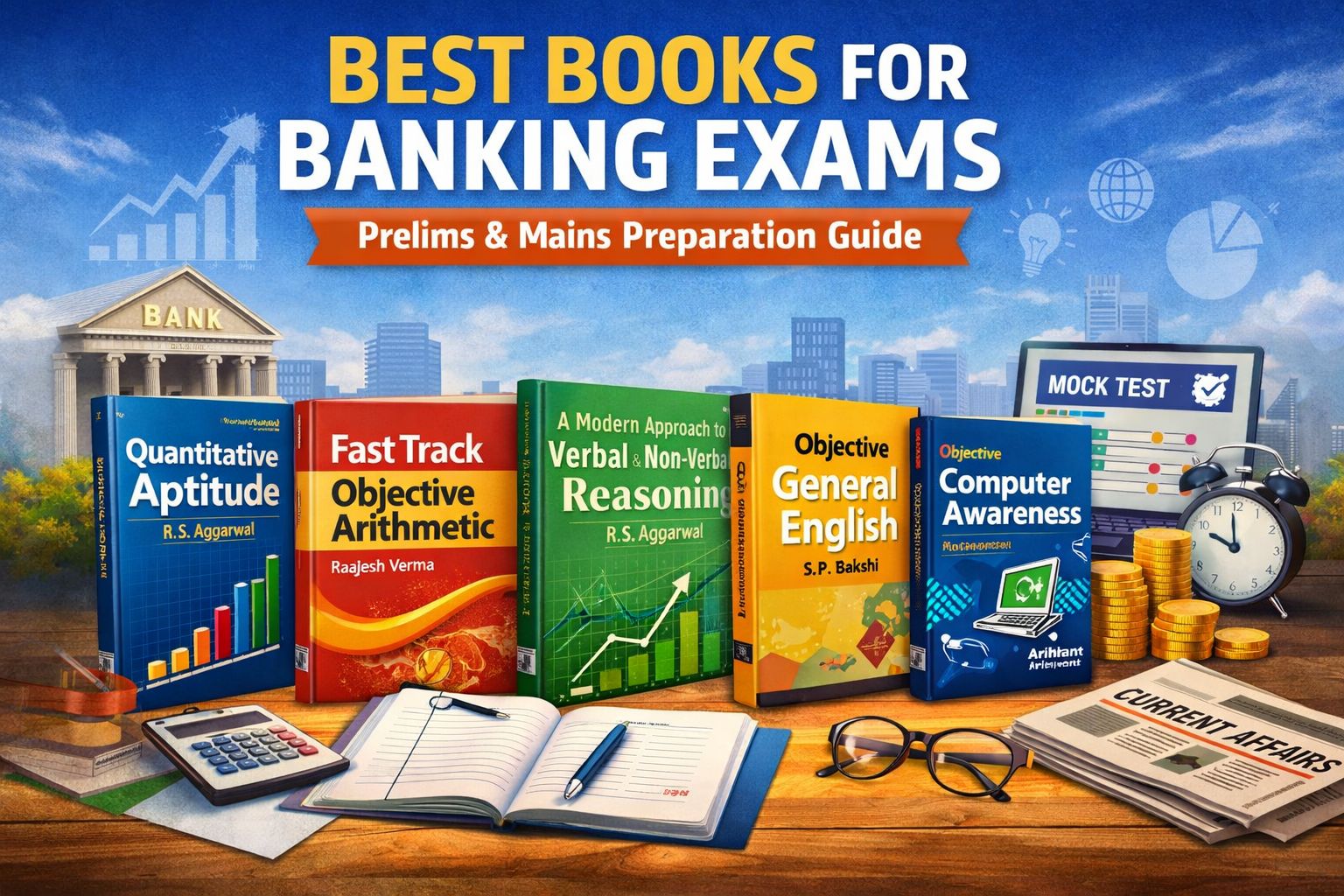
Start Your Banking Exam Preparation with the Right Books
Boost your chances of success with expert-recommended books for SBI, IBPS & RBI exams — Prelims + Mains preparation.
View Best Banking Exam BooksWhy Banking Exam Preparation is More Challenging for Working Professionals
Preparing for banking exams while managing a full-time job is completely different from preparing as a full-time student. Working professionals often have the maturity, discipline, and real-world experience needed to succeed, but they also face unique challenges that can slow down their preparation if not handled strategically.
Unlike college students who may have flexible schedules, job holders must balance office responsibilities, personal commitments, and study time within a fixed 24-hour routine. This makes banking exam preparation not just a matter of studying hard, but studying smart.
One of the biggest challenges is the limited availability of uninterrupted study time. After spending 8–10 hours at work, it becomes difficult to maintain the same level of focus and energy needed for subjects like Quantitative Aptitude or Reasoning Ability. Mental fatigue after office hours often leads to procrastination or irregular study habits, which can directly impact consistency — a key factor in cracking competitive exams.
Another important issue is the lack of a fixed study routine. Office workloads, meetings, deadlines, and unexpected tasks can disturb even the most well-planned study schedule. As a result, many working aspirants find it difficult to complete topics on time or follow a structured preparation method.
In addition, maintaining a healthy work-life-study balance becomes a serious concern. Managing professional responsibilities along with personal life and exam preparation can create stress and burnout if the preparation strategy is not realistic and flexible.
This is why working professionals need a completely different approach compared to traditional aspirants. Instead of relying on long study hours, success in banking exams depends on:
- Effective time management
- Priority-based study planning
- Regular revision
- Focused practice sessions
Understanding these challenges is the first step towards building a preparation strategy that fits into your working lifestyle without overwhelming your daily routine.
Can You Really Crack Banking Exams While Doing a Full-Time Job?
This is one of the most common questions among working professionals who aspire to enter the banking sector. The short answer is — yes, it is absolutely possible to crack banking exams even if you are working full-time. However, the approach you follow will determine your success.
Many successful banking candidates have cleared exams like IBPS PO, SBI Clerk, and RBI Assistant while managing demanding jobs. The difference between those who succeed and those who struggle is not the number of study hours, but the quality of preparation and consistency.
Working professionals often assume that they need to study for 8–10 hours daily to compete with full-time aspirants. In reality, what matters more is:
- A well-structured preparation plan
- Clear understanding of exam pattern and syllabus
- Daily focused practice
- Continuous revision
Competitive banking exams are designed to test your problem-solving ability, accuracy, speed, and decision-making skills — not how long you can sit with your books. This means that a candidate who studies smartly for 3–4 hours every day with proper planning can outperform someone who studies randomly for longer hours.
Another important factor is having a realistic mindset. As a working aspirant, you may not be able to complete the entire syllabus in a short time frame like a full-time student. But with a planned strategy and disciplined routine, you can cover the most important topics and gradually improve your performance through practice and mock tests.
Instead of depending on motivation alone, your preparation should be guided by:
- Practical time management
- Target-based study sessions
- Topic-wise planning
- Regular self-assessment
Cracking banking exams while doing a job is not about working harder — it’s about working smarter with the time you already have.
Understanding the Right Banking Exam Preparation Approach for Job Holders
For working professionals, the biggest mistake in banking exam preparation is trying to follow the same study approach as full-time aspirants. Since job holders have limited study time on weekdays, their preparation method must be more focused, practical, and result-oriented.
Instead of attempting to cover everything at once, working candidates should follow a priority-based study approach. This means identifying high-weightage topics and focusing on concepts that frequently appear in the exam. By doing so, you can make better use of your limited study hours and ensure that your efforts are aligned with the actual exam requirements.
A balanced preparation strategy should always include:
- Concept clarity
- Regular practice
- Timely revision
Many aspirants spend too much time either understanding concepts without practicing enough questions or solving questions without fully understanding the basics. Both approaches can lead to poor performance in the actual exam. Working professionals should divide their preparation time wisely between learning new concepts and applying them through practice questions.
Another important part of preparation is revision. Since you may not be studying for long hours daily, it becomes easier to forget previously covered topics if they are not revised regularly. Weekly revision sessions can help reinforce your understanding and improve accuracy in mock tests.
A smart preparation approach for job holders should follow this cycle:
- Learn the concept
- Practice related questions
- Identify mistakes
- Revise weak areas
Following this structured method helps you progress steadily without feeling overwhelmed by the vast banking exam syllabus.
To understand a more detailed preparation strategy that you can follow independently, you can refer to our complete banking self study guide.
Time Management Strategy for Working Aspirants Preparing for Banking Exams
Time management is the most critical factor for working professionals preparing for banking exams. Since you already have fixed working hours, the key to success lies in effectively utilizing the remaining time without disturbing your work-life balance.
The first step is to identify your most productive hours of the day. Some candidates are able to concentrate better in the early morning before going to work, while others prefer studying in the evening after office hours. Understanding when your mind is most active can help you schedule important subjects like Quantitative Aptitude or Reasoning during that time.
Working professionals should avoid setting unrealistic study targets. Instead of planning long study sessions that are difficult to maintain daily, focus on short and productive study slots. Even 2–3 hours of focused preparation on weekdays can make a significant difference if used properly.
You can divide your weekday study time into:
- Concept learning sessions
- Practice sessions
- Quick revision sessions
Another effective technique is the micro-study method. This involves utilizing small time slots throughout the day, such as:
- Commute time
- Lunch breaks
- Waiting periods
- Short breaks at work
During these intervals, you can revise formulas, go through current affairs updates, or solve a few practice questions using mobile apps or notes.
In addition to daily planning, it is equally important to create a weekly study schedule. This helps you track topic completion, allocate time for revision, and ensure that no subject is ignored for too long.
A well-managed schedule should include:
- Weekday concept building
- Daily practice
- Weekend revision
- Mock test analysis
Proper time management allows working professionals to maintain consistency in their preparation without experiencing burnout or excessive stress.
Ideal Daily Study Routine for Working Professionals Preparing for Banking Exams
Creating a practical daily study routine is essential for working professionals who are preparing for banking exams. Since your weekdays are mostly occupied with office responsibilities, your study plan should be simple, flexible, and easy to follow consistently.
A well-balanced daily routine can be divided into four effective study phases:
1. Morning Study Session
Early morning is often the best time to study, as your mind is fresh and free from daily work stress. Even studying for 60–90 minutes in the morning can help you understand new concepts more effectively.
You can use this time for:
- Learning new topics
- Understanding concepts
- Reading English comprehension
- Studying Quant or Reasoning basics
Concept-based subjects should always be given priority during morning hours.
2. Study During Office Breaks
Short breaks during office hours can be used for light study activities that do not require deep concentration.
You can utilize this time for:
- Revising formulas
- Reading current affairs
- Going through vocabulary
- Solving simple practice questions
This method ensures that you remain connected with your preparation even on busy workdays.
3. Evening Practice Routine
After returning from work and taking some rest, you can dedicate 60–90 minutes to practicing questions based on the concepts you studied earlier.
This session should focus on:
- Solving Quantitative Aptitude questions
- Practicing Reasoning puzzles
- Attempting English grammar exercises
- Improving accuracy
Daily practice helps in strengthening problem-solving speed and reduces mistakes over time.
4. Night Revision Strategy
Before going to bed, spend 20–30 minutes revising whatever you studied during the day. This improves retention and helps you remember important concepts for a longer duration.
Night revision can include:
- Reviewing notes
- Revising important formulas
- Going through error logs
- Planning the next day’s topics
Following this simple daily routine allows working professionals to maintain preparation consistency without compromising their job responsibilities.
Smart Weekend Study Plan for Banking Exam Preparation
For working professionals, weekends play a crucial role in banking exam preparation. Since weekdays are usually limited to short study sessions, weekends provide an opportunity to dedicate longer hours to focused learning and performance improvement.
Instead of studying randomly on weekends, you should follow a structured study plan that helps you cover important areas of preparation.
1. Attempt Full-Length Mock Tests
Start your weekend preparation by attempting at least one full-length mock test. This helps you:
- Understand your current performance level
- Improve time management skills
- Get familiar with the exam pattern
- Identify strong and weak areas
Mock tests simulate the actual exam environment and prepare you mentally for the real test day.
2. Analyze Your Mock Test Performance
Attempting mock tests alone is not enough. You should spend sufficient time analyzing your performance to understand:
- Which questions you answered incorrectly
- Topics where you took more time
- Areas where accuracy needs improvement
Proper analysis helps in identifying mistakes and avoiding them in future tests.
3. Improve Weak Topics
After analyzing your mock test, focus on topics where your performance was poor. Use this time to:
- Relearn concepts
- Practice topic-wise questions
- Clear doubts
- Strengthen fundamentals
Working on weak areas regularly can significantly improve your overall score.
4. Weekly Revision Session
Reserve some time on weekends for revising topics you studied during the week. This helps in:
- Improving retention
- Reducing confusion
- Strengthening conceptual understanding
Regular revision ensures that you do not forget previously covered topics due to limited weekday study hours.
A well-planned weekend routine can help working professionals make steady progress in their preparation and bridge the gap between limited weekday study time and exam requirements.
Subject-Wise Preparation Strategy for Banking Exams
A well-planned subject-wise preparation strategy is essential for working professionals who want to crack banking exams without wasting time on unnecessary topics. Since you may not have the luxury of studying for long hours daily, focusing on each subject with a clear approach can improve both accuracy and speed.
Quantitative Aptitude
Quantitative Aptitude requires regular practice and conceptual clarity. Start with basic arithmetic topics such as:
- Percentage
- Profit and Loss
- Ratio and Proportion
- Simple and Compound Interest
- Time and Work
Once you are comfortable with the basics, gradually move towards topics like Data Interpretation and Simplification. Practicing questions daily can help in improving calculation speed and reducing errors.
Reasoning Ability
Reasoning is a scoring section if prepared systematically. Focus on understanding question patterns rather than memorizing solutions.
Important topics include:
- Puzzles
- Seating Arrangement
- Syllogism
- Coding-Decoding
- Blood Relations
Try solving reasoning questions within a time limit to build accuracy and speed.
English Language
The English section tests your grammar, vocabulary, and comprehension skills. To improve performance:
- Read newspapers or articles daily
- Practice error detection questions
- Solve reading comprehension passages
- Work on sentence improvement
Consistent practice is key to improving language skills over time.
General Awareness
General Awareness plays a vital role in Mains examinations. Focus on:
- Banking and financial awareness
- Current affairs
- Static general knowledge
Make short notes while studying current affairs so that revision becomes easier before exams.
Computer Knowledge
Basic computer knowledge is required in many banking exams. Important topics include:
- Computer fundamentals
- Internet basics
- Input and output devices
- MS Office basics
You can cover this section by studying basic concepts and practicing related questions.
For a more detailed understanding of how to prepare each subject effectively without coaching, you can refer to our complete banking self study guide.
Mock Test Strategy for Working Candidates Preparing for Banking Exams
Mock tests are one of the most important tools in banking exam preparation, especially for working professionals who have limited time for daily study. They help you understand your preparation level, improve speed and accuracy, and identify the areas that require more attention.
When Should You Start Attempting Mock Tests?
Working aspirants should ideally start attempting mock tests after completing the basic concepts of major subjects like Quantitative Aptitude, Reasoning Ability, and English Language. You do not need to wait until the entire syllabus is finished.
Starting mocks early can help you:
- Understand the actual exam pattern
- Learn time management
- Build confidence
- Improve problem-solving skills
How Many Mock Tests Should You Attempt Per Week?
Due to office commitments, attempting daily mock tests may not be practical. Instead, you can follow this schedule:
- 1 sectional mock test during weekdays
- 1 or 2 full-length mock tests on weekends
This allows you to balance preparation with your professional responsibilities.
Importance of Mock Test Analysis
Mock test analysis is as important as attempting the test itself. After completing a mock test, spend time reviewing:
- Incorrect answers
- Time-consuming questions
- Weak topics
- Accuracy rate
Maintaining an error log can help you track mistakes and avoid repeating them in future tests.
Tips to Improve Accuracy Through Mock Tests
- Avoid guesswork
- Focus on solving easy and moderate questions first
- Skip lengthy questions initially
- Review incorrect answers carefully
Regular mock test practice and proper analysis can significantly improve your exam performance over time, even if you are preparing alongside a full-time job.
Best Study Resources for Banking Exam Preparation
Choosing the right study resources is extremely important for working professionals preparing for banking exams. Since your available study time is limited, referring to too many books or materials can create confusion and slow down your preparation.
The key is to keep your resources simple, relevant, and exam-focused.
Online vs Offline Study Material
Working candidates often prefer online study material because it offers flexibility and easy access. With online resources, you can:
- Study anytime and anywhere
- Watch concept-based video lessons
- Practice topic-wise quizzes
- Attempt mock tests
However, offline resources such as standard preparation books are equally important for building strong conceptual clarity and practicing a variety of questions.
A balanced preparation approach should include:
- One reliable book per subject
- Daily practice questions
- Weekly mock tests
- Regular revision notes
Avoid switching between multiple study materials frequently, as this can lead to incomplete preparation and unnecessary stress.
Recommended Preparation Approach
To prepare effectively while managing a full-time job:
- Select limited but high-quality resources
- Focus on understanding concepts first
- Practice regularly from the same material
- Revise important topics weekly
This approach helps in maintaining consistency and reduces the chances of missing important exam topics.
To explore the most recommended preparation books for different banking exam subjects, you can refer to our detailed list of best books for banking exams.
3-Month Banking Study Plan for Working Professionals
A structured study plan is essential for working professionals who want to prepare for banking exams within a limited time frame. If you are able to dedicate 2–3 hours daily on weekdays and more time on weekends, a 3-month preparation plan can help you cover the most important topics effectively.
Month 1: Concept Building Phase
During the first month, focus on understanding the basic concepts of all major subjects.
Your preparation should include:
- Learning fundamental topics of Quantitative Aptitude
- Understanding reasoning question patterns
- Improving basic English grammar
- Starting daily current affairs preparation
- Studying basic computer knowledge
Avoid rushing through topics. Make sure you understand the concepts clearly before moving forward.
Month 2: Practice and Improvement Phase
In the second month, start solving topic-wise practice questions regularly.
Focus on:
- Improving calculation speed
- Practicing reasoning puzzles
- Solving reading comprehension passages
- Attempting sectional mock tests
- Revising previously studied topics
This phase should help you strengthen your weak areas and improve accuracy.
Month 3: Mock Test and Revision Phase
The final month should be dedicated to:
- Attempting full-length mock tests
- Analyzing mock test performance
- Revising important formulas and concepts
- Practicing previous year questions
- Improving time management skills
Regular mock test analysis will help you identify mistakes and improve your overall score before the actual exam.
To follow a more detailed daily and weekly preparation routine, you can check out our complete banking study plan.
How to Stay Motivated While Preparing for Banking Exams with a Full-Time Job
Maintaining motivation during banking exam preparation can be difficult for working professionals. Managing office responsibilities along with daily study sessions often leads to mental fatigue and stress, which may affect consistency over time.
One of the most effective ways to stay motivated is by setting realistic and achievable goals. Instead of trying to complete large portions of the syllabus in a single day, break your preparation into smaller targets such as:
- Completing one topic
- Practicing a fixed number of questions
- Revising previously studied concepts
Achieving these small goals regularly can create a sense of progress and keep you motivated throughout your preparation journey.
Avoid Burnout
Continuous work and study without proper rest can result in burnout. Make sure to:
- Take short breaks between study sessions
- Get enough sleep
- Avoid overloading yourself with unrealistic targets
A balanced routine helps in maintaining long-term consistency.
Track Your Progress
Monitoring your performance through mock tests and practice sessions can help you understand how much you have improved over time. Seeing measurable progress can boost confidence and reduce exam-related anxiety.
Maintain Consistency
Consistency is more important than studying for long hours occasionally. Even if you can dedicate only 2–3 hours daily, regular preparation can produce better results than irregular long study sessions.
Staying disciplined and following a structured routine can help you remain motivated until the final exam day.
Common Mistakes Working Aspirants Must Avoid During Banking Exam Preparation
Working professionals often face unique challenges while preparing for banking exams, and certain common mistakes can slow down their progress or reduce their chances of success. Being aware of these mistakes can help you plan your preparation more effectively.
1. Following an Unrealistic Study Schedule
Many working aspirants create ambitious study plans that are difficult to maintain alongside office responsibilities. This often leads to missed targets and loss of motivation. Always design a practical study routine that fits your daily work schedule.
2. Ignoring Revision
Due to limited study time, some candidates focus only on learning new topics and skip revision. This can result in forgetting previously studied concepts. Regular weekly revision is essential for improving retention and accuracy.
3. Using Too Many Study Materials
Referring to multiple books or online resources can create confusion and incomplete preparation. Stick to limited and reliable study materials to maintain clarity and consistency.
4. Not Analyzing Mock Tests
Attempting mock tests without analyzing performance is a common mistake. Proper analysis helps you identify weak areas and improve your problem-solving approach.
5. Neglecting Weak Topics
Many aspirants prefer practicing topics they are already comfortable with while avoiding difficult ones. Ignoring weak areas can negatively impact your overall score in the exam.
6. Studying Only on Weekends
Relying completely on weekend study sessions is not sufficient. Even short weekday study sessions are necessary to maintain continuity in preparation.
Avoiding these mistakes can help working professionals stay consistent and make steady progress in their banking exam preparation.
Start Your Banking Exam Preparation with the Right Books
Boost your chances of success with expert-recommended books for SBI, IBPS & RBI exams — Prelims + Mains preparation.
View Best Banking Exam BooksConclusion
Preparing for banking exams while managing a full-time job may seem challenging, but with the right approach and a well-structured plan, it is completely achievable. Working professionals do not need to rely on long study hours; instead, success depends on smart time management, focused preparation, regular practice, and consistent revision.
By creating a realistic daily routine, utilizing weekends effectively, attempting mock tests regularly, and avoiding common preparation mistakes, you can steadily improve your performance without compromising your professional responsibilities.
The key is to stay disciplined, follow a practical study strategy, and make the most of the limited time available each day. With dedication and a result-oriented preparation approach, clearing banking exams alongside your job becomes a realistic and achievable goal.
FAQs
Q1. Can I crack banking exams while working a full-time job?
Yes, it is possible to crack banking exams while working full-time if you follow a smart preparation strategy. Consistent study, proper time management, and regular mock test practice can help working professionals perform well in competitive exams.
Q2. How many hours should a working professional study daily for banking exams?
Ideally, working aspirants should aim to study for 2–3 hours on weekdays and dedicate more time on weekends for mock tests and revision. Focused study sessions are more effective than long but irregular study hours.
Q3. Is coaching necessary for banking exam preparation for job holders?
Coaching is not mandatory for clearing banking exams. Many working professionals successfully prepare through self-study by following a structured preparation plan and practicing regularly using reliable study materials.
Q4. When should working candidates start attempting mock tests?
You can start attempting mock tests after completing the basic concepts of important subjects like Quantitative Aptitude, Reasoning Ability, and English Language. Early mock test practice helps improve speed and accuracy.
Q5. How can working professionals maintain consistency in preparation?
Maintaining consistency requires a realistic study schedule, daily short study sessions, weekly revision, and proper utilization of weekends for practice and mock tests.