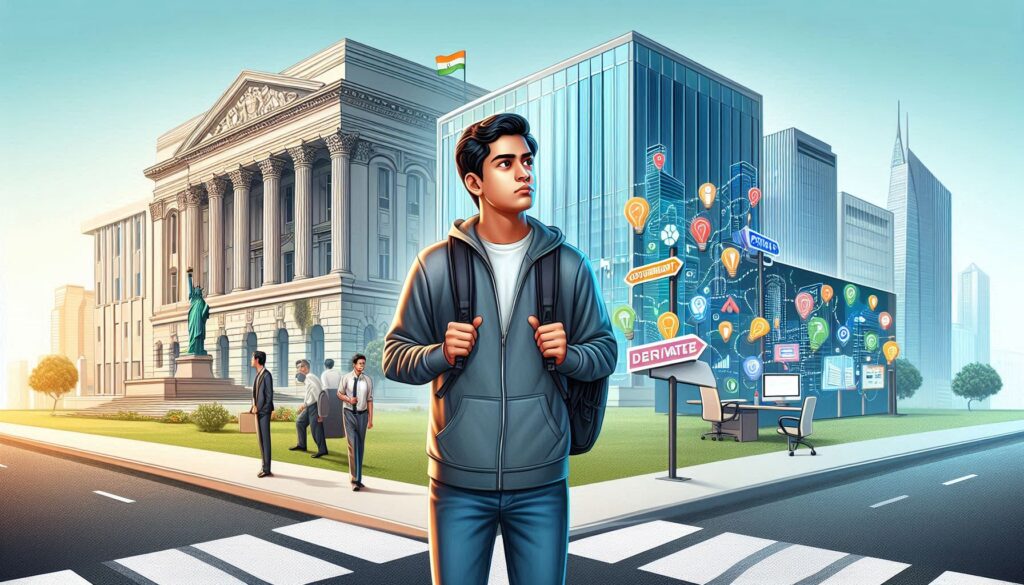
Discover how technology is reshaping career paths worldwide by creating new opportunities, skills, and industries for the future workforce.
Introduction: The Global Shift in Careers
Just a few decades ago, career choices across the world followed a predictable pattern. People selected professions based on stability, family expectations, or long-established paths such as engineering, medicine, teaching, or government jobs. Once a career was chosen, it often lasted a lifetime. Skills changed slowly, and the idea of switching careers mid-way was considered risky or unusual.
Today, that reality has changed completely.
This article explains how technology is transforming career choices worldwide and reshaping the future of work for students and professionals alike.
Technology has become the strongest force shaping how people choose careers—across countries, cultures, and economies. From students deciding what to study, to professionals rethinking their future roles, technology is influencing what people do, how they work, and where they work from. Career decisions are no longer limited by geography, traditional education systems, or fixed job descriptions.
One of the biggest global shifts is the move from job security to skill security. Instead of asking, “Which job will last forever?”, people are now asking, “Which skills will stay relevant?” This change is visible worldwide—from developed nations to emerging economies—because technology spreads faster than any previous industrial change.
Another major transformation is speed. Earlier, industries evolved slowly, giving workers decades to adapt. Today, new technologies emerge within years, sometimes months, reshaping entire professions. As a result, careers are no longer linear. People upgrade skills, switch roles, work remotely, freelance, or even manage multiple career identities at the same time.
Technology has also democratized opportunity. A person no longer needs to live in a major city or attend an elite institution to access global career options. With the internet, digital tools, and online platforms, talent can be discovered from anywhere. This has fundamentally changed how young people, professionals, and even employers think about careers.
In this article, we explore how technology is transforming career choices worldwide—creating new opportunities, redefining success, and demanding a mindset of continuous learning. Understanding this shift is no longer optional; it is essential for anyone planning a future in the modern world.
The Digital Revolution & the End of Traditional Career Paths
The digital revolution has fundamentally altered how work is done across industries. Unlike earlier industrial changes that mainly affected physical labor, this revolution directly impacts thinking, decision-making, and routine professional tasks. As a result, many traditional career paths are no longer as stable or predictable as they once were.
For decades, careers followed a fixed structure. People trained for a specific role, joined an organization, and progressed step by step within the same field. These paths depended heavily on repetition—doing the same tasks efficiently over time. Technology has disrupted this model by automating repetitive and rule-based work faster and more accurately than humans.
Automation, software systems, and intelligent tools are now handling tasks that were once considered secure white-collar jobs. Data entry, basic accounting, routine customer support, manual reporting, and even some diagnostic roles have been partially or fully automated. This does not mean jobs are disappearing overnight, but it does mean that the nature of work is changing.
Traditional careers that rely only on fixed processes are under pressure. Employers no longer value time spent in a role as much as they value adaptability. A professional who cannot upgrade skills or work with new tools risks becoming irrelevant, regardless of experience. This shift has made long-term career planning more complex, but also more flexible.
Another major change is the breakdown of rigid job definitions. Earlier, job roles were clearly separated—marketing, finance, operations, technology. Today, technology connects these functions. A marketer is expected to understand analytics, a manager must work with digital platforms, and even non-technical roles require comfort with software and data-driven tools.
Degrees and titles alone are no longer strong career guarantees. Employers across the world are increasingly focused on practical capability—how well someone can solve problems using modern tools. This has weakened the traditional belief that choosing the “right degree” automatically leads to a successful career.
The digital revolution has not ended careers; it has ended unchanging careers. Stable paths still exist, but stability now comes from continuous learning, not from staying in one role. People who adapt to technology find new opportunities opening up, while those who resist change face shrinking options.
Understanding this shift is critical. Technology is not removing career choices—it is reshaping them. The real challenge is no longer choosing a single profession for life, but learning how to evolve as professions themselves continue to change.
New-Age Careers Created by Technology Worldwide
One of the most visible ways technology is transforming career choices worldwide is through the creation of entirely new professions. Many of today’s in-demand careers simply did not exist a decade ago. This shift has changed how people think about education, job security, and long-term growth.
Technology-driven careers are born from new needs. As businesses adopt digital tools, cloud systems, automation, and data-driven decision-making, they require professionals who can design, manage, and improve these systems. This demand is not limited to any single country—it is global. A company in one part of the world can hire skilled talent from another, as long as the required expertise exists.
Careers related to artificial intelligence and machine learning are a strong example. These roles focus on building systems that can analyze data, recognize patterns, and assist in decision-making. Similarly, data science and analytics careers have grown rapidly because organizations now rely on data to understand customers, improve efficiency, and predict future trends.
Cybersecurity is another field created by technological dependence. As digital systems expand, protecting information has become critical. This has led to careers centered on digital safety, risk management, and system protection—roles that were almost unheard of in traditional career planning.
Cloud computing and software development have also reshaped career options. Businesses no longer depend only on physical infrastructure; they operate on digital platforms accessible from anywhere. This has increased demand for developers, system architects, and technical problem-solvers who can build and maintain scalable digital solutions.
Beyond technical roles, technology has created opportunities in creative and strategic fields. Digital marketing, content creation, user experience design, and online education are examples of careers that combine creativity with technology. These paths allow individuals to work independently, remotely, or with global organizations.
What makes new-age careers different is flexibility. Career growth is not tied to age, location, or traditional titles. Skills, real-world projects, and continuous learning matter more than formal labels. This has empowered people to switch careers, upskill quickly, and build professional identities that align with both market demand and personal interests.
Technology has not just added new jobs—it has expanded the definition of what a career can be. For those willing to learn and adapt, the modern career landscape offers more options than ever before.
Remote Work & the Borderless Job Market
Technology has removed one of the biggest limitations in career planning: location. In the past, career opportunities were closely tied to where a person lived. Major cities offered better jobs, while talent in smaller towns or developing regions often remained unnoticed. Today, digital tools have changed that reality.
Remote work has transformed the global job market into a borderless system. With high-speed internet, cloud platforms, and collaboration software, professionals can now work for organizations located thousands of miles away. Companies no longer hire only within their country; they hire based on skills, efficiency, and reliability.
This shift has opened global opportunities for individuals who were previously excluded from international careers. A skilled professional can now contribute to projects, attend virtual meetings, and deliver results without relocating. For many, this has reduced costs, improved work-life balance, and expanded access to high-paying roles.
Technology has also accelerated the rise of freelancing, contract-based work, and project-driven careers. Professionals can choose to work independently with multiple clients instead of committing to a single employer. Platforms, digital payment systems, and online portfolios have made it easier to showcase skills and build trust across borders.
The borderless job market has changed how careers are evaluated. Employers focus more on output than hours, and performance matters more than presence. This has encouraged professionals to develop strong communication, time management, and self-discipline skills—qualities essential for remote success.
However, remote work is not limited to technology roles alone. Careers in design, writing, marketing, consulting, education, customer support, and management have all adapted to remote or hybrid models. This has made modern careers more flexible and inclusive.
The global shift toward remote work has redefined career freedom. People now design careers around lifestyle choices, personal goals, and long-term growth rather than fixed office locations. Technology has turned the world into a shared workspace—where opportunity travels digitally, not geographically.
Skill-Based Careers Replacing Degree-Based Careers
Across the world, technology has shifted the focus of career building from formal qualifications to practical ability. While degrees still hold value, they are no longer the primary deciding factor for career success. Employers are increasingly asking a simple question: what skills can a person apply in real situations?
Technology changes tools and processes rapidly, making static knowledge outdated. A degree earned years ago may not reflect current industry needs. As a result, organizations now prioritize hands-on skills, problem-solving ability, and the capacity to learn new tools quickly. This has transformed how individuals plan their education and career paths.
Skill-based careers emphasize what a person can do rather than where they studied. Software development, digital marketing, data analysis, design, cybersecurity, and many other fields evaluate candidates through practical tests, portfolios, or real-world projects. This approach reduces dependency on traditional credentials and opens doors for self-taught professionals.
Online learning platforms, virtual classrooms, and global certification programs have accelerated this transition. People can now acquire industry-relevant skills from anywhere, often at lower cost and in less time than conventional education. Continuous learning has become a career requirement rather than an optional advantage.
This shift has also changed career mobility. Professionals can move between roles or industries by upgrading specific skills instead of starting from zero. A person working in operations can learn data tools, a teacher can transition into online education, and a marketer can specialize in analytics-driven strategies.
For students, this transformation offers both opportunity and responsibility. Career success now depends less on choosing a “perfect” degree and more on building adaptable skill sets. For professionals, it means staying curious and investing regularly in learning.
Technology has not removed the value of education; it has redefined it. Education is no longer a one-time phase of life but an ongoing process. In the modern world, skills are the new currency, and those who continuously develop them remain competitive in an ever-changing career landscape.
Role of Artificial Intelligence in Career Transformation
Artificial Intelligence has become one of the most influential technologies shaping career choices worldwide. It is often discussed with fear—many people believe AI will replace jobs entirely. In reality, AI is not simply eliminating work; it is reshaping how work is done and what skills are valued.
AI systems are designed to process large amounts of data, recognize patterns, and perform tasks faster than humans in specific areas. This has changed many roles, especially those based on repetitive analysis or routine decision-making. However, instead of removing human involvement, AI has shifted human roles toward supervision, creativity, strategy, and problem-solving.
New career opportunities have emerged around AI itself. Professionals are needed to design AI systems, train models, manage data quality, interpret AI-generated insights, and ensure ethical use of technology. These roles require a mix of technical understanding and human judgment—something machines cannot fully replace.
More importantly, AI is transforming existing careers rather than only creating new ones. In healthcare, intelligent systems support diagnosis, while doctors continue to make final decisions. Financial institutions use AI to analyze risk and trends; however, humans remain responsible for defining long-term strategy. Education has also evolved, with AI assisting learning processes as teachers guide understanding and critical thinking. This pattern can be seen across multiple industries worldwide.
The most valuable professionals in the AI-driven era are those who can work with intelligent tools rather than compete against them. Understanding how AI supports productivity gives individuals a strong career advantage, even in non-technical fields. Basic AI awareness is becoming as essential as computer literacy once was.
Adaptability is the key factor here. Careers that combine human strengths—critical thinking, empathy, communication, and creativity—with AI capabilities are the most future-proof. Those who resist technological assistance may struggle, while those who embrace it can multiply their impact.
Artificial Intelligence is not the end of human careers. It is a shift toward smarter collaboration between humans and machines. The future belongs to professionals who learn how to use AI as a tool, not view it as a threat.
Technology Empowering Entrepreneurship & Self-Employment
Technology has transformed not only how people work, but also who they work for. One of the most powerful career shifts worldwide is the rise of entrepreneurship and self-employment, driven almost entirely by digital tools and online platforms. Starting a business or working independently is no longer limited to those with large investments or physical infrastructure.
Earlier, entrepreneurship required offices, staff, capital, and long-term risk. Today, technology has lowered these barriers dramatically. A laptop, internet connection, and a marketable skill are often enough to begin. This has led to the growth of solopreneurs—individuals who run independent businesses, consultancies, or digital services on their own.
Online platforms allow professionals to offer services globally. Designers, writers, developers, marketers, educators, and consultants can find clients across countries without intermediaries. Digital payment systems, cloud tools, and communication platforms make it possible to manage work efficiently from anywhere.
Technology has also created entirely new forms of entrepreneurship. Content creators, online educators, app developers, e-commerce sellers, and digital product creators are examples of careers that did not exist in traditional business models. These careers combine creativity, personal branding, and technical understanding.
Another major change is control over career growth. Self-employed professionals can choose projects, define working hours, and scale income based on effort and strategy. While this path requires discipline and adaptability, it offers freedom that traditional employment often cannot.
However, technology-driven entrepreneurship also demands continuous learning. Markets evolve quickly, competition is global, and success depends on staying updated with tools and trends. Those who treat self-employment as a long-term skill-building journey are more likely to sustain growth.
Technology has shifted the idea of success from “working for the biggest company” to “building something valuable.” For many people worldwide, entrepreneurship and self-employment are no longer risky alternatives—they are realistic, respected, and scalable career choices.
How Technology Is Changing Career Decision-Making for Students
Technology has completely transformed how students explore, evaluate, and choose careers. Earlier generations relied mainly on parents, teachers, and local exposure to decide their future. Career awareness was limited to a few well-known professions. Today, students are exposed to global career possibilities from a very early age.
The internet has become the first career counselor. Students research professions online, watch real professionals share experiences, explore salary data, and understand skill requirements before making decisions. This access to information has increased awareness, but it has also introduced confusion due to excessive and sometimes misleading content.
Social media and digital platforms play a powerful role in shaping aspirations. Students now see real-life examples of people building careers in technology, creativity, entrepreneurship, and remote work. This visibility has encouraged many to think beyond traditional career boundaries and consider paths aligned with personal interests and strengths.
Technology has also shifted focus from marks to mastery. Students are increasingly interested in learning practical skills alongside formal education. Coding, digital design, content creation, data tools, and online communication skills are being developed early because students understand their global relevance.
Another important change is flexibility in planning. Career decisions are no longer final at a young age. Technology allows students to experiment, learn, fail, and pivot without long-term damage. Online courses, internships, and projects enable exploration before commitment.
However, this freedom comes with responsibility. Without proper guidance, students may chase trends rather than build strong foundations. The challenge today is not lack of opportunity, but choosing the right direction among many options.
Technology has empowered students to take ownership of their careers. The most successful individuals are those who combine curiosity with patience, use digital resources wisely, and focus on long-term skill development rather than short-term popularity.
Challenges & Risks in Technology-Driven Careers
While technology has created unprecedented career opportunities, it has also introduced new challenges that cannot be ignored. Understanding these risks is essential for making informed and sustainable career choices in a rapidly evolving global environment.
One of the biggest challenges is the speed at which skills become outdated. Technologies evolve quickly, and tools that are in demand today may lose relevance within a few years. This creates constant pressure to learn, adapt, and upgrade skills. For those unwilling or unable to keep learning, career growth can slow down significantly.
Another major risk is information overload. The internet offers unlimited career advice, but not all of it is accurate or suitable for every individual. Trends are often exaggerated, and many people chase popular skills without understanding long-term demand or personal suitability. This can lead to frustration, wasted time, and unclear career direction.
Technology-driven careers are also highly competitive. Because global access is open, professionals often compete with talent from around the world. While this raises standards and quality, it can increase stress and self-doubt, especially among beginners or early-career professionals.
Mental well-being is another concern. Remote work, constant connectivity, and performance-based evaluation can blur the boundary between personal life and professional responsibilities. Without discipline and balance, burnout becomes a real risk.
There is also the challenge of unequal access. Not everyone has the same resources, guidance, or digital exposure. While technology democratizes opportunity, it does not automatically guarantee success. Strategic planning, mentorship, and self-awareness remain critical.
Technology-driven careers are powerful, but they are not effortless. Success depends on thoughtful learning, realistic expectations, and long-term consistency. Recognizing challenges early helps individuals prepare better and build careers that are both rewarding and sustainable.
How Technology Is Shaping Future Career Choices Worldwide
The future of careers will be defined not by a single technology, but by how humans adapt to continuous technological change. As digital tools, automation, and intelligent systems become more integrated into everyday work, career paths will continue to evolve across industries and regions.
One of the strongest trends is the growing importance of human-centered skills. While technology handles speed and scale, skills such as critical thinking, creativity, emotional intelligence, ethical judgment, and communication will remain irreplaceable. Careers that blend technical understanding with human insight will dominate the future job market.
Another key trend is lifelong learning becoming a standard expectation. Careers will no longer follow a start-and-finish model. Professionals will regularly reskill and upskill to stay relevant. Short-term learning programs, modular certifications, and on-the-job learning will play a larger role than traditional one-time education.
Interdisciplinary careers will also rise. The future professional may not belong to a single domain. Technology will connect fields such as healthcare and data, education and software, finance and analytics, and creativity and artificial intelligence. This blending will create roles that require broad understanding rather than narrow specialization.
Flexibility will define career success. Future careers will allow movement between roles, industries, and working styles. Professionals who can adapt to new tools and changing environments will have greater stability than those who rely on fixed titles.
Technology will also support more personalized career paths. Data-driven tools will help individuals identify strengths, learning gaps, and suitable opportunities. This will shift career planning from guesswork to informed decision-making.
The future does not belong to those who predict exact job titles—it belongs to those who prepare for change. Technology will continue to reshape careers, but individuals who remain adaptable, curious, and proactive will always find opportunity.
How to Prepare for a Technology-Driven Career (Practical Guide)
Preparing for a technology-driven career does not mean everyone must become a technical expert. It means developing the right mindset, skills, and habits that allow continuous growth in a changing environment. This preparation is relevant for students, working professionals, and even career switchers worldwide.
The first step is skill awareness. Instead of focusing only on job titles, individuals should understand which skills are in demand within their field. Technical tools, digital literacy, data understanding, and problem-solving abilities are increasingly valuable across industries. Choosing skills that align with both personal interest and market demand creates long-term stability.
The second step is learning through practice. Technology-based careers reward real-world application more than theoretical knowledge. Projects, case studies, internships, simulations, and hands-on work build confidence and credibility. Even small projects demonstrate initiative and learning ability.
Next comes continuous learning. Technology does not stand still, and neither can careers. Setting a habit of regular learning—whether through short courses, reading, experimentation, or peer collaboration—keeps skills relevant. Learning should be treated as a career investment, not a temporary phase.
Another critical factor is adaptability. Career paths may change direction multiple times. Being open to new roles, tools, and industries increases resilience. Those who accept change as normal progress faster than those who wait for stability to return.
Finally, building a global-ready mindset is essential. Communication skills, cultural awareness, time management, and digital collaboration abilities prepare individuals for international and remote opportunities. Professional growth today often depends on how well one can work across borders and teams.
Preparing for a technology-driven career is not about racing ahead—it is about moving consistently in the right direction. Small, focused efforts over time create strong and sustainable career outcomes.
Frequently Asked Questions (FAQs)
Q1. Will technology eliminate jobs completely?
Technology changes the nature of jobs rather than eliminating work entirely. While some roles become automated, new roles emerge that require human judgment, creativity, and oversight. Careers evolve instead of disappearing.
Q2. Are non-technical careers still relevant in a technology-driven world?
Yes. Non-technical careers remain important, but they increasingly require basic digital skills. Fields like education, healthcare, management, communication, and creativity benefit from technology rather than being replaced by it.
Q3. Can anyone switch to a technology-driven career?
Career transitions are possible at any stage, provided individuals are willing to learn and adapt. Many technology-driven roles value skills, projects, and problem-solving ability over age or previous job titles.
Q4. Is formal education still necessary for modern careers?
Formal education provides strong foundations, but it is no longer sufficient on its own. Continuous learning, practical experience, and skill development are essential to stay relevant in modern careers.
Q5. How can students avoid confusion while choosing careers in the digital age?
Students should focus on building core skills, seek reliable guidance, and avoid chasing short-term trends. Exploring interests through small projects and learning gradually helps create clarity.
Conclusion: Technology as an Opportunity, Not a Risk
Technology has permanently transformed how careers are chosen, built, and sustained across the world. The traditional idea of selecting one profession for life has been replaced by a more dynamic, skill-focused approach that rewards adaptability and learning.
Rather than viewing technology as a threat, individuals should see it as a powerful tool that expands opportunity. It allows people to work globally, learn independently, and shape careers based on strengths rather than limitations. While challenges exist, those who remain flexible and curious are better positioned to grow.
The future belongs not to those with the most prestigious titles, but to those who continue learning and evolving. Careers will keep changing, but the ability to adapt will always remain valuable. In a technology-driven world, success is no longer about predicting the future—it is about preparing for it.

Exploring Your Career Options?
Career decisions are not made in one step. They become clearer by understanding different paths, real-world realities, and long-term growth opportunities.
Browse more career guidance articles designed to help students and beginners make informed and confident career choices.
Explore Career Path Guidance →