
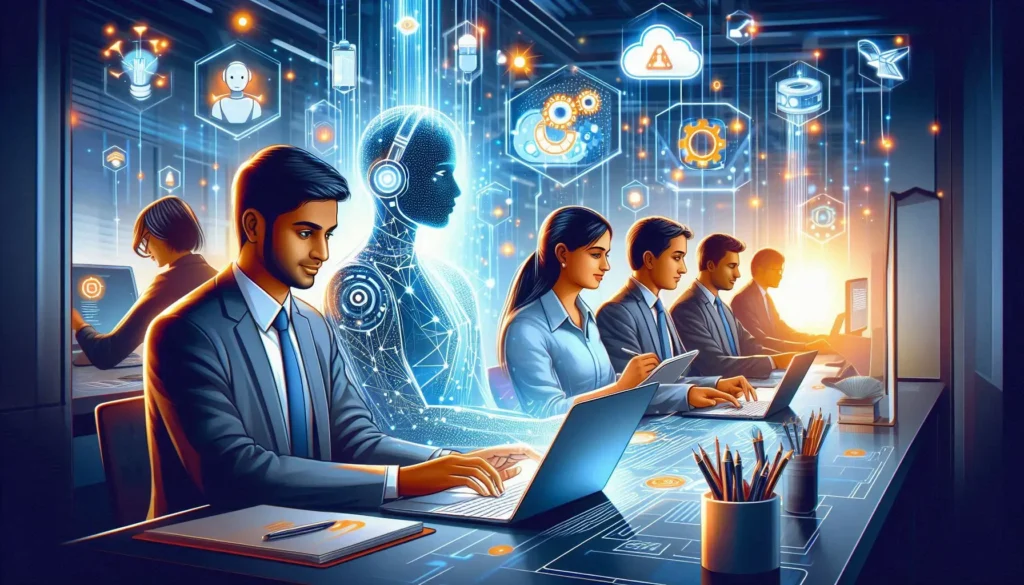
Technology is transforming the way we work faster than ever before. From artificial intelligence (AI) and automation to remote work and digital skills, the future of jobs is being reshaped across all industries. Jobs that existed a decade ago are evolving, and many new career opportunities are emerging.
In this blog, we will explore how technology is changing the future of jobs, what skills are becoming important, and how beginners can prepare themselves for upcoming career opportunities.
Automation and Artificial Intelligence (AI)
Automation and AI are two of the biggest forces changing modern workplaces.
How AI is impacting jobs:
- Repetitive and manual tasks are being automated
- Machines and software can now analyze data and make decisions
- Chatbots and AI tools are replacing basic customer support roles
Example:
- Data entry jobs are being reduced due to automation
- AI tools like ChatGPT help in content creation, customer support, and automation workflows
👉 Important point:
Technology does not only replace jobs—it also creates new roles like:
- AI Automation Specialist
- Prompt Engineer
- Data Analyst
Rise of Remote Work and Digital Jobs
Technology has removed geographical limitations from jobs.
Key changes:
- Employees can work from anywhere using the internet
- Companies hire global talent instead of local-only staff
- Freelancing and remote jobs are growing rapidly
Popular remote job roles:
- Content writer
- Digital marketer
- Virtual assistant
- Online instructor
- Web developer
Tools like Zoom, Google Meet, Slack, and cloud platforms make remote work efficient and reliable.
Importance of Digital Skills
In the future, digital skills will be more important than traditional degrees alone.
High-demand digital skills:
- Computer fundamentals
- AI automation
- Digital marketing
- Basic coding
- Data handling
- Online communication skills
People who continuously learn and upgrade their skills will have better job security.
New Job Roles Created by Technology
Technology is creating entirely new careers that did not exist earlier.
Examples of new-age jobs:
- AI Automation Creator
- Social Media Manager
- App Tester
- Cloud Computing Specialist
- Cybersecurity Analyst
- Online Course Creator
Many of these jobs can be started with basic computer knowledge and online learning, making them suitable for beginners.
Technology and Skill-Based Hiring
Companies are now focusing more on skills rather than certificates.
Hiring trends:
- Practical knowledge is valued more than theory
- Portfolios and real projects matter
- Short-term skill-based courses are preferred
This is good news for students, job seekers, and self-learners who want to enter the job market quickly.
Continuous Learning is the Key
Technology changes rapidly, so learning never stops.
To stay relevant:
- Learn new tools regularly
- Update your skills every year
- Follow industry trends
- Practice real-world applications
Those who stop learning may struggle, while learners will grow faster.
How Beginners Can Prepare for the Future of Jobs
If you are a beginner, you can still prepare yourself easily.
Simple steps:
- Learn basic computer skills
- Understand how AI tools work
- Explore automation and productivity tools
- Start with beginner-friendly online courses
- Practice using real examples
Even one skill learned today can open many job opportunities in the future.
FAQs: How Technology is Changing the Future of Jobs
1. How is technology changing jobs today?
Technology is changing jobs by automating repetitive tasks, introducing artificial intelligence, and enabling remote work. Many traditional roles are evolving, while new technology-based jobs are being created across industries.
2. Will technology replace human jobs completely?
No, technology will not replace all human jobs. While automation may reduce some roles, it also creates new opportunities that require human creativity, decision-making, and problem-solving skills.
3. What is the impact of AI on jobs?
AI is transforming jobs by improving efficiency and productivity. AI and jobs now work together, where AI handles routine tasks and humans focus on strategic and creative work.
4. What are the most in-demand skills for the future of jobs?
The most important digital skills for the future include computer literacy, AI tools usage, automation skills, data handling, digital marketing, and communication skills.
5. How does technology affect employment opportunities?
Technology and employment are closely connected. Technology enables global hiring, freelancing, remote jobs, and skill-based employment, making job opportunities more flexible and accessible.
6. Can beginners prepare for future jobs without a technical background?
Yes, beginners can prepare by learning basic computer skills, understanding AI tools, and taking beginner-friendly digital courses. Many future jobs focus more on skills than degrees.
7. What types of jobs will grow in the future?
Jobs related to AI automation, digital marketing, online education, data analysis, cybersecurity, and remote services are expected to grow rapidly in the future.
8. Why are digital skills important for future careers?
Digital skills help individuals adapt to technological changes, improve job security, and access new career opportunities in the evolving job market.
9. How can students stay relevant in the changing job market?
Students can stay relevant by continuously learning new technologies, practicing real-world skills, and keeping up with industry trends.
10. Is learning technology useful for small businesses and self-employed people?
Yes, technology helps small businesses and self-employed individuals improve productivity, automate tasks, reach more customers, and grow faster with fewer resources.
Conclusion
Technology is not destroying jobs—it is changing the nature of jobs. The future belongs to those who adapt, learn, and grow with technology. Automation, AI, and digital platforms are creating smarter, flexible, and skill-based careers.
If you start learning technology today, you can build a strong and secure career tomorrow.
👉 Want more insights on startup ideas, AI automation, skill development, and online business from home?


